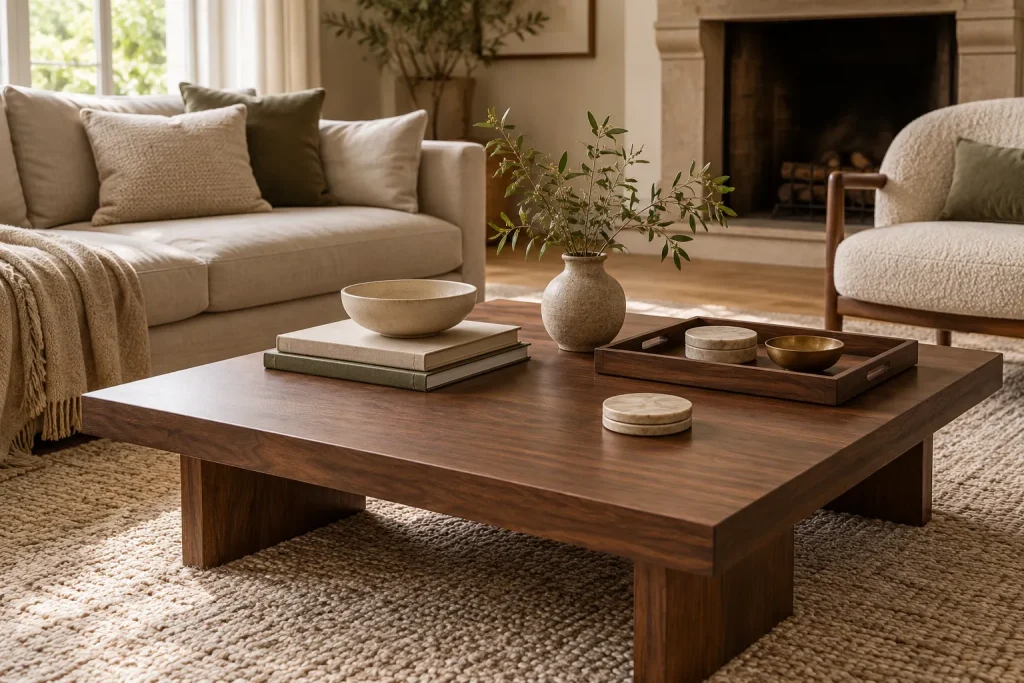
A well-styled coffee table should make a living room feel settled before you notice any single object. It gives the eye a place to rest, connects the sofa to the rest of the room, and keeps a few useful things within reach. The best coffee table decor ideas begin with that everyday role. Beauty matters, but so do clear edges, an open place for a cup, and enough breathing room for the table to remain usable.
Balance does not require perfect symmetry or a fixed formula. It comes from giving objects different visual weights, repeating a few materials or colors, and leaving intentional space between groups. A stack of books can provide a low horizontal base, a bowl or tray can gather smaller pieces, and one taller element can lift the arrangement. When those elements respond to the table’s shape and the room around it, the result feels composed rather than staged.
The following approach treats the whole tabletop as part of the living room. It works with what you already own, allows the arrangement to change with daily life, and keeps the final edit calm enough to live with.
Why the Coffee Table Matters to the Room
The coffee table sits at the center of many sightlines. From the doorway, it often appears between the sofa and a chair. From the sofa, it occupies the foreground beneath artwork, windows, or shelving. Even a small table can influence whether the room feels open, crowded, formal, or relaxed.
Because it is low, the table creates a pause in the vertical rhythm of a room. Lamps, chair backs, curtains, and plants pull the eye upward. Coffee table decor should usually stay below those stronger features, with only one or two pieces adding modest height. This keeps conversation views open and lets the surrounding furniture remain the larger frame.
Start with the Table’s Scale and Daily Role
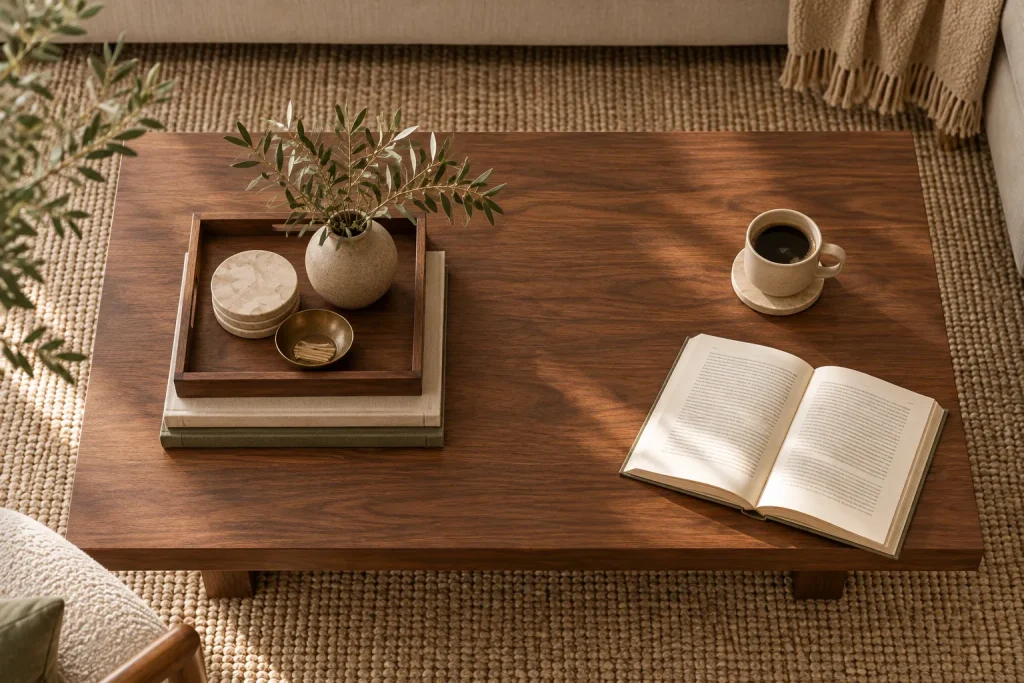
Before adding decor, look at the table itself. Note its length, width, shape, height, finish, and distance from the surrounding seating. Then decide how the surface is used on a normal evening. A household that serves tea at the table needs a different amount of open space from one that mainly keeps books and flowers there. For a circular surface, see round coffee table decor ideas.
Map the Clear Space First
Imagine the empty surface as part of the design. Reserve a comfortable landing area near the seat most often used. Keep corners and circulation edges clear, especially when the table sits close to a walkway. If people regularly move around both ends, avoid objects that project beyond the tabletop or sit where sleeves and hands will catch them.
This first step prevents the familiar problem of arranging everything beautifully and then discovering there is nowhere to place a glass. It also makes the composition look more deliberate. Empty space separates forms and lets grain, stone texture, or a reflective finish remain visible. For a longer surface, see rectangular coffee table decor ideas.
Choose One Visual Anchor
An anchor is the element that gives the arrangement its center of gravity. It might be a low tray, a broad bowl, a stack of two books, or a single sculptural object. Choose one, then let the other pieces support it. Several anchors competing for attention can make a small surface feel like a display shelf. For the book stack, see coffee table book decor.
Coffee Table Decor Ideas for a Balanced Arrangement
Once the open area and anchor are defined, build the composition in layers. Work slowly and remove pieces as often as you add them. A balanced arrangement tends to contain contrast in height, shape, and texture, but repeats enough visual cues to feel connected.
Build Three Distinct Levels
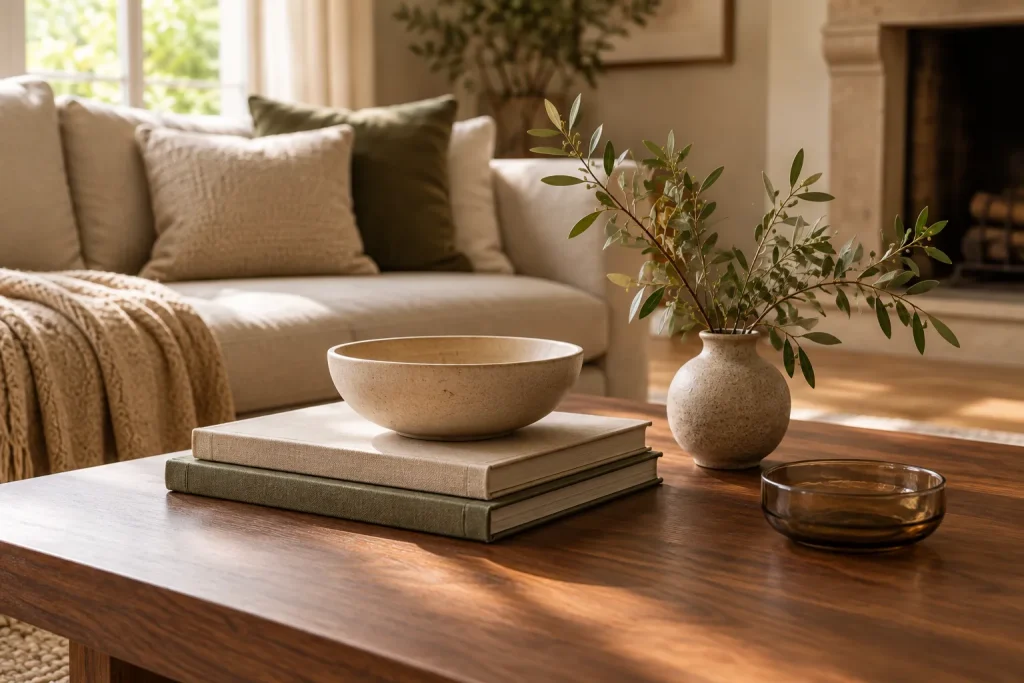
Use a low element, a medium element, and one restrained high point. Books or a tray can form the low base. A bowl, candle, or compact object can sit at the middle level. A small vase, branch, or leafy stem can provide height. The differences do not need to be dramatic; a few inches can be enough to stop the group from reading as a flat row.
Keep the tallest item off the main conversation line. Place it slightly toward the far side of the table, or choose an airy stem that does not create a solid visual block. If the room already has a strong plant or lamp nearby, the tabletop may need less height.
Distribute Visual Weight
Visual weight comes from size, color, texture, and density. A dark object may feel heavier than a pale one of the same dimensions. A thick stack of books can balance a taller but slender vase. A rough stone surface may carry more presence than clear glass.
Rather than centering every object, let the group lean gently toward one side while keeping a smaller counterweight nearby. On a rectangular table, a low book stack at one end can balance a round bowl or compact tray at the other. The relationship should be visible without creating a rigid mirror image.
Leave Negative Space Between Groups
Negative space makes the arrangement legible. Leave a narrow gap between a book stack and a bowl rather than pressing them together. Let one area of the tabletop remain completely free. These pauses reveal the edge of each form and help the table retain its practical purpose.
If the composition still feels busy after spacing objects apart, remove the least useful or least distinctive piece. A smaller number of well-scaled elements usually looks more generous than a crowded collection of small accents.
Use a Decorative Tray as a Flexible Boundary
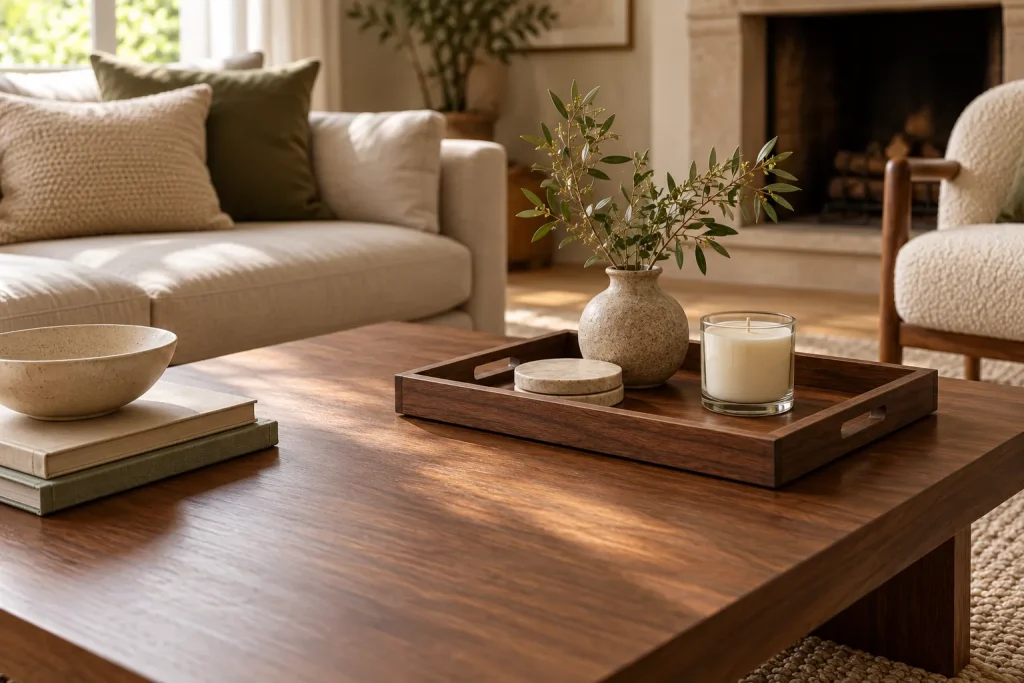
A tray can define one zone and gather objects that would otherwise scatter across the table. It is especially useful for remotes, a candle, a small vase, or coasters. The tray should support the arrangement without filling the entire surface or becoming a container for every loose item in the room.
Choose a shape that responds to the table. A rounded tray can soften a rectangular surface, while a long tray can follow the direction of a generous table. Maintain a visible border of tabletop around it. That surrounding space helps the tray read as one part of the composition rather than as a second tabletop placed on the first.
For a broader view of proportion and available finishes, the Living Room collection provides a useful reference for how trays sit within coffee table settings. A warm wood option such as the Haven walnut wood tray can bring a grounded, natural note to pale upholstery or stone. The Alba travertine-look tray offers a quieter, pale surface when the room already contains darker wood. Use either as an accent within the full tabletop arrangement, not as the subject of the room.
Keep the tray edit simple. One taller object, one lower practical item, and a little exposed tray surface often feel more composed than many small pieces. If the tray must move when the table is used, make sure the objects inside it are stable and easy to lift together. For the smaller group, see coffee table tray decor ideas.
Work with Color, Material, and Texture
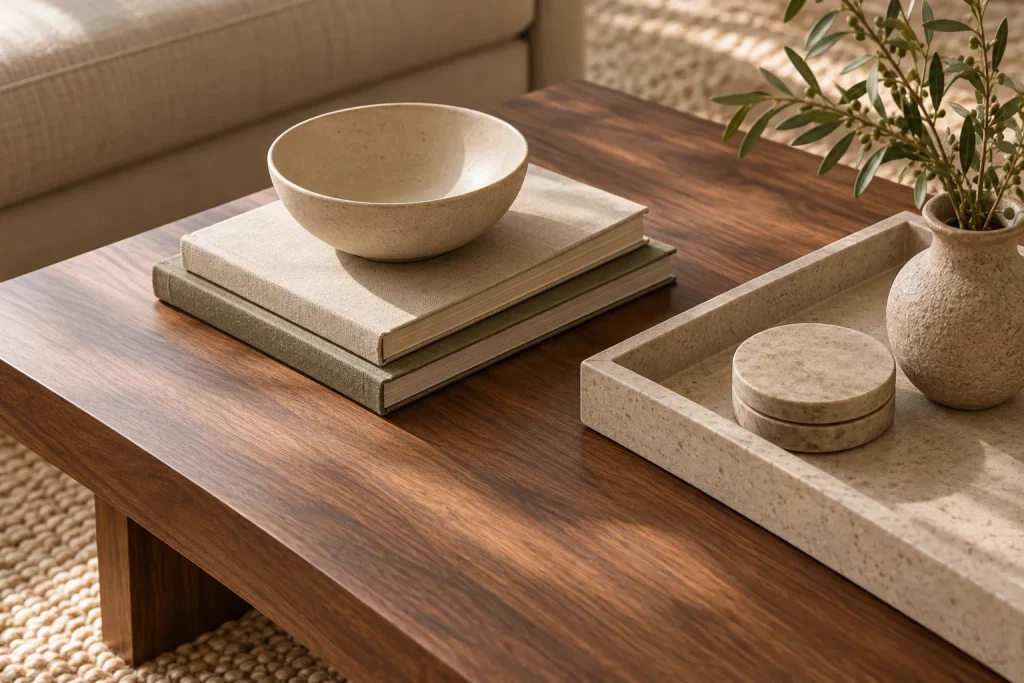
Coffee table styling gains depth when hard and soft, matte and reflective, or smooth and irregular surfaces meet. The contrast should be subtle enough to belong to the room’s existing palette. For a transparent surface, see glass coffee table decorating ideas.
Warm a Neutral Room with Natural Grain
In a cream, beige, or warm gray room, wood can prevent the palette from feeling flat. Repeat its tone in a small frame, book cover, or woven detail, then add a pale ceramic or clear glass element for relief. Natural variation in the grain supplies pattern without requiring a bold print.
Quiet a Dark Table with Pale Stone Tones
A dark wood or metal table often benefits from one pale, matte element. A stone-look tray, off-white bowl, or softly bound book can open the composition visually. Keep the surrounding objects restrained so the contrast remains calm rather than graphic.
Add Softness Without Covering the Surface
Textiles can appear indirectly through a fabric-bound book, a small woven coaster, or the upholstery reflected in the palette. Avoid draping cloth across the coffee table unless it serves a real purpose. The table’s material is part of the room and should remain visible.
Adapt the Arrangement to Your Interior Style
The same principles can support several aesthetics. Change the shapes, materials, and amount of empty space while keeping the structure useful.
Organic Modern
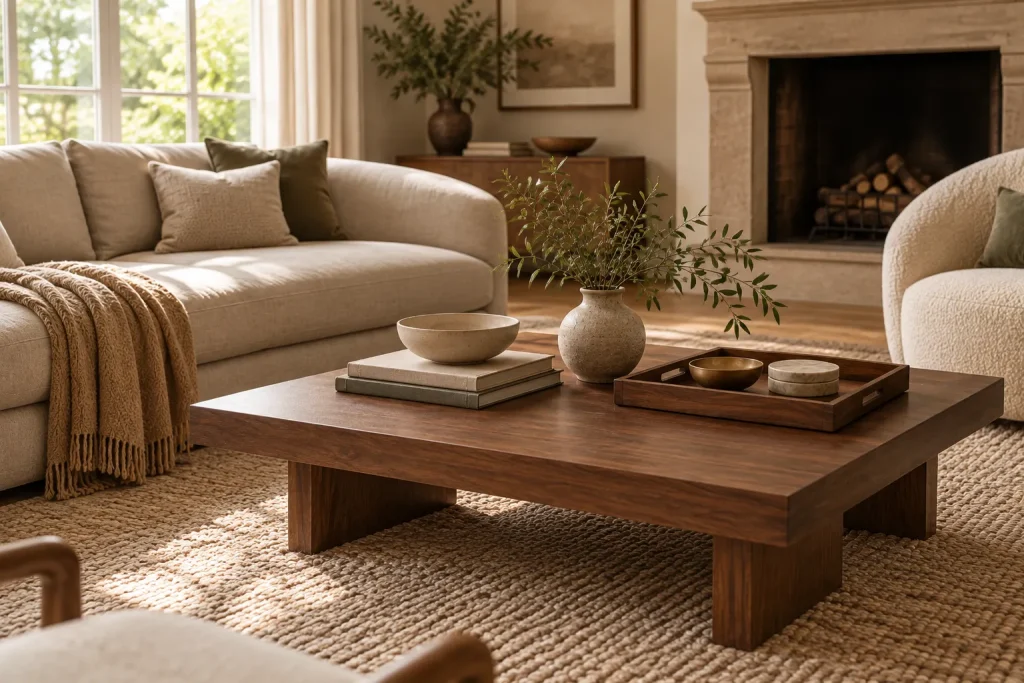
Combine soft curves, warm wood, matte ceramics, and one irregular natural form. Use asymmetry and generous space to keep the arrangement relaxed. A branch with a loose outline, a rounded bowl, and a low book stack can be enough.
Minimalist
Choose fewer, larger elements. A single tray with one functional object and one sculptural piece may provide all the variation needed. Keep colors close in value, avoid decorative filler, and protect a clear landing zone.
Quiet Contemporary
Mix one crisp geometric form with a softer shape. A rectangular book stack can sit near a rounded vessel, while a dark accent repeats a nearby lamp or frame. The composition may be more polished, but it should still allow easy daily use.
Keep the Arrangement Livable
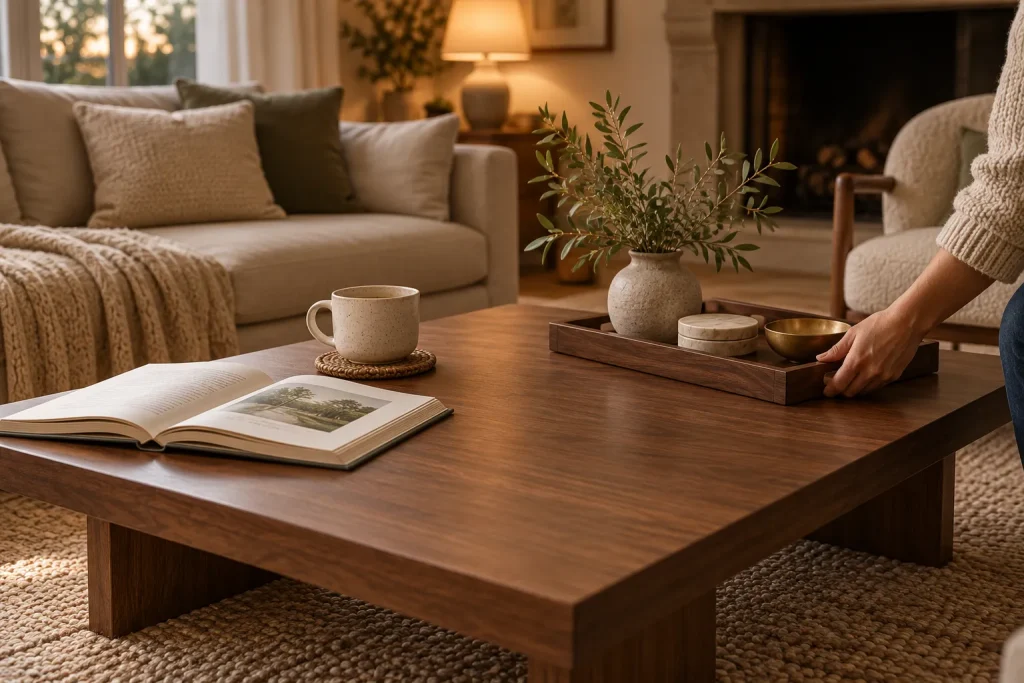
Coffee table decor works best when it can absorb small changes. Leave room for the current book, shift a vase when guests arrive, and use a tray to move practical items together. The arrangement should recover easily after an evening in the room.
Edit it from the seated view as well as from above. Objects that look balanced in a photograph may block the television, interrupt conversation, or feel too tall from the sofa. Sit in each main seat and adjust the height and spacing. Then walk into the room and check whether the composition connects with the larger furniture group.
Seasonal changes can remain light. Replace a branch, book, or small bowl rather than rebuilding the table around themed objects. Keeping the anchor and overall spacing consistent helps the living room retain its identity throughout the year.
Common Styling Mistakes and How to Correct Them
Everything Is the Same Height
A flat row of objects has little rhythm. Raise one element with a book or introduce a modest vertical piece. Keep the difference proportional so the high point does not dominate the room.
Too Many Small Objects
Several tiny accents can read as clutter even when each is attractive. Group the most useful pieces on a tray or replace them with one larger form. Preserve only objects that add a distinct function, texture, or shape.
The Arrangement Fills Every Edge
When decor reaches the perimeter, the table feels smaller and less usable. Pull the composition inward and reopen at least one clear side. Visible margins make the objects feel intentional.
Perfect Symmetry Feels Stiff
Identical objects placed at equal distances can make a living room feel formal. Keep the overall weight balanced while varying heights or offsets. A low stack can answer a taller vessel without copying its shape.
Practical Items Have No Home
If remotes and coasters always land beside the decor, include them in the plan. Give them a low container, a tray corner, or a consistent open zone. Everyday objects look calmer when their location is deliberate.
Frequently Asked Questions
How many objects should be on a coffee table?
Use as many as the table can hold while preserving clear space and daily function. For many tables, three to five visual elements arranged in one or two groups are enough. Count a stack of books as one element rather than several separate pieces.
Should coffee table decor be centered?
It can be, but it does not have to be. A slightly off-center group often feels more natural, especially on a rectangular table. Balance the offset with open space or a smaller element rather than mirroring the arrangement exactly.
How tall should coffee table decor be?
Most pieces should remain low enough to protect views across the seating area. Use one modest high point if it adds rhythm, then check it from every seat. Airy branches or narrow stems usually interrupt the view less than a dense arrangement.
Can I style a small coffee table without making it crowded?
Yes. Choose one compact anchor, one useful object, and one contrasting texture. Keep the colors related and leave part of the surface empty. A smaller number of larger forms often looks calmer than many miniature accents.
How often should I change coffee table decor?
Change it when the room’s use or season gives you a reason. A fresh stem, a current book, or a different bowl can shift the mood without replacing the whole arrangement. A stable base makes small updates feel coherent.
Final Thoughts
The most enduring coffee table decor ideas begin with the room rather than the objects. Protect the table’s daily role, choose one anchor, vary the heights with restraint, and let negative space remain visible. Repeat a few colors or materials so the arrangement connects to the sofa, lighting, and surrounding furniture.
When every piece has a purpose and enough room around it, the table feels finished without looking fixed. It becomes a quiet center for the living room: composed for the eye, practical for ordinary moments, and easy to adjust as life moves around it.