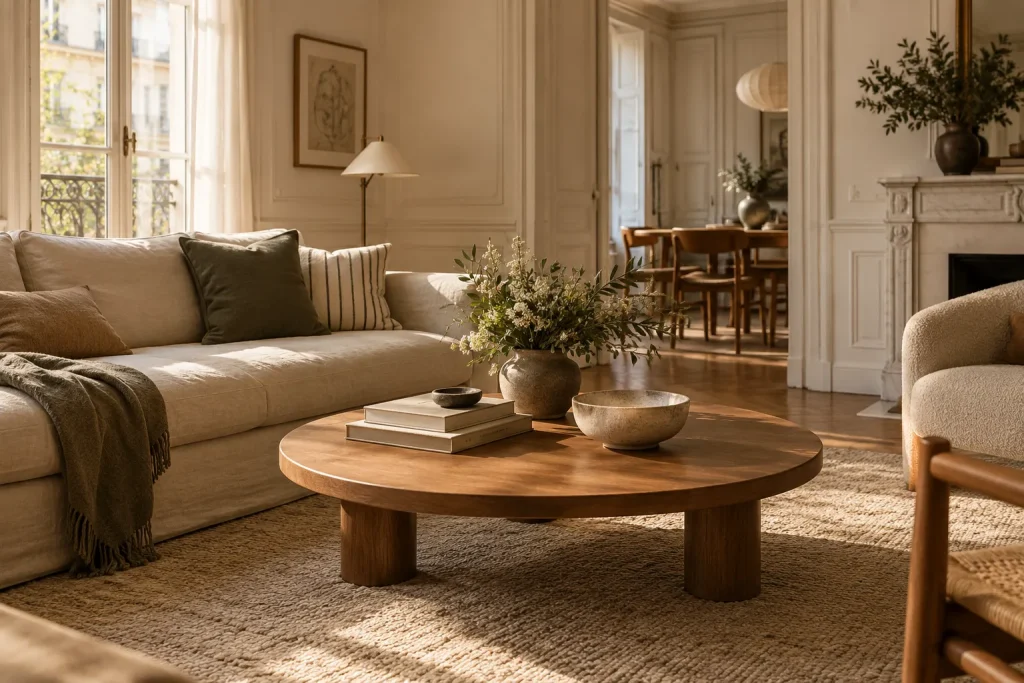
A round coffee table gives a living room a gentle center, but its curved edge can make familiar arrangements feel unexpectedly awkward. A row of objects may look stranded, while a large centerpiece can leave nowhere to set a cup. The most useful round coffee table decor ideas work with the circle: a compact focal group, a little variation in height, and an open arc that remains easy to reach.
Think of the tabletop as a place people approach from several directions. The arrangement should feel composed from the sofa, welcoming from a nearby chair, and simple to move when the room changes use. You do not need to fill the circumference. A few considered pieces can make its shape more visible and its everyday purpose clearer.
Read the Circle from Every Seat
Begin with an empty table and sit where you normally relax. Notice which part of the surface your hand reaches first, where a drink would land, and whether a vase would interrupt the view of another person. Repeat this from the other seats. A circular top has no obvious front, so an arrangement that works only from the doorway may disappoint when you actually use it.
The table’s base matters too. A substantial pedestal already creates a strong central presence; a delicate open frame may benefit from a little more visual weight above. Look at the whole piece, including the space beneath it, before choosing accessories. This prevents a small tabletop from becoming crowded simply because its footprint appears generous from above.
Reserve an Open Arc
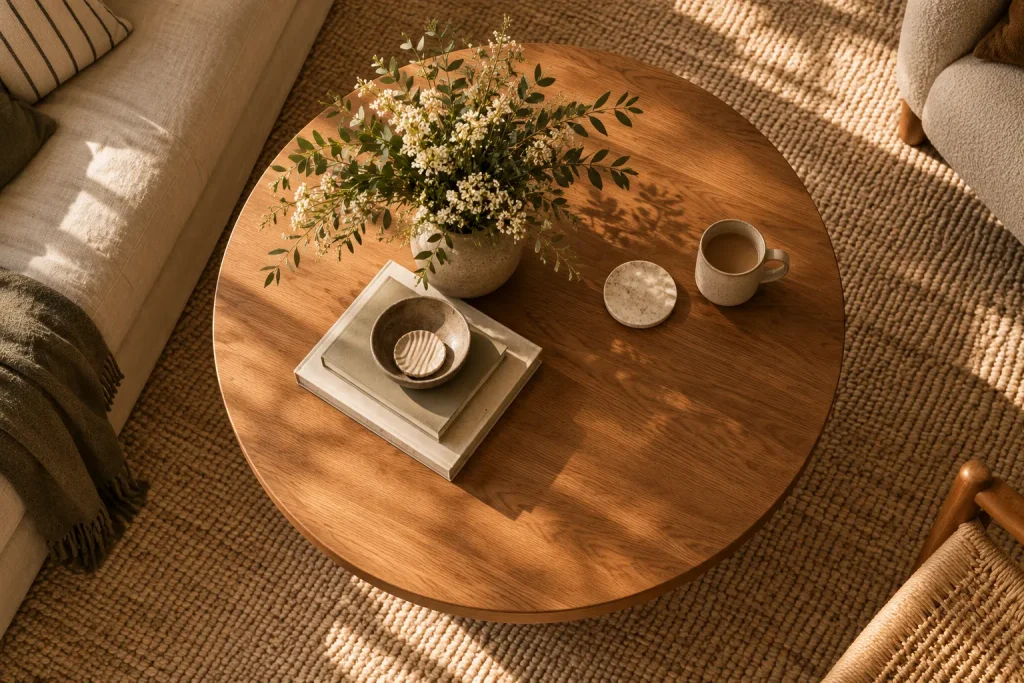
Keep a continuous stretch of tabletop clear on the side used most often. This open arc is more useful than several tiny gaps between ornaments. It gives a mug, a book, or a guest’s glass a natural place to land without rearranging the display. On a table shared by facing seats, leave usable space on both sides and make the central group smaller.
There is no universal proportion that suits every table. Test the arrangement with the objects you actually use: a coaster, your usual mug, and an open magazine. If they fit only after the vase moves, the display needs editing. The clear area should also be visible from a seated position, so it feels available rather than accidentally empty.
Round Coffee Table Decor Ideas with a Clear Center
Choose one object or compact group to establish the arrangement, then let the remaining pieces support it. A low bowl, a short stack of books, or a modest tray can provide this anchor. Centered placement feels quiet and formal; moving the anchor slightly away from the main seat creates a more relaxed layout and a wider landing area nearby.
Avoid pushing everything out toward the perimeter. Objects distributed evenly around the edge can make the table resemble a display stand and leave an awkward hole in the middle. Bring related pieces together so they read as one composition, then allow the surrounding circle to remain open. The table’s outline becomes part of the decoration.
Try a Loose Triangle
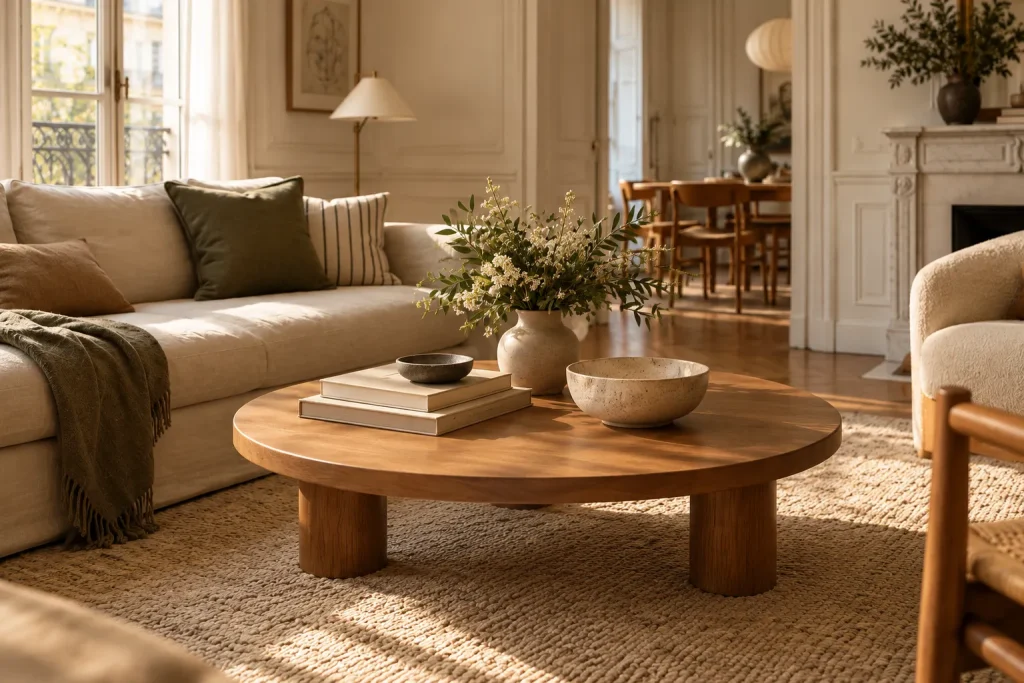
A low book stack, a medium bowl, and a slender vase can create three different points without forming a rigid geometric diagram. Keep the points close enough to belong together and vary their spacing. The tallest object usually works best farther from the main seat, where it adds depth without dominating the foreground.
Three is a starting point, not a requirement. A small table may need only a bowl and one book. A broad table can accommodate a larger grouping, provided each piece has a purpose. Judge the relationship between shapes rather than counting accessories. If two objects do the same visual job, remove the less useful one and see whether the arrangement becomes clearer.
Choose a Tray That Leaves the Curve Visible
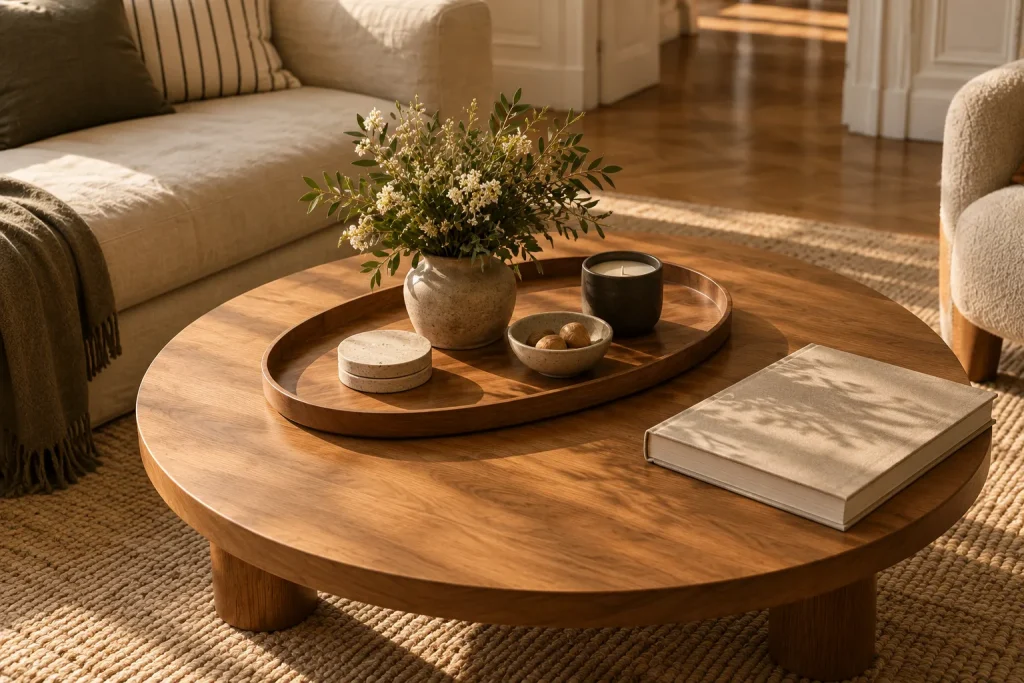
A tray can gather coasters and a small decorative object into a movable group. Its outline does not have to match the table. A round tray repeats the curve and feels soft; an oval or rounded rectangular tray introduces a measured contrast. The important test is whether a readable band of tabletop remains around it, especially near the edge used for drinks.
Cut a paper shape to the tray’s proposed outer footprint before choosing one. Place it on the table and test reach, seating views, and the remaining space. This simple rehearsal is more revealing than comparing product photographs, where scale and camera angle can be misleading. Account for handles or projecting edges as well as the central surface.
For material ideas, the Living Room collection offers context for how a tray can sit within a wider room. A Haven walnut wood tray introduces warm wood grain, while an Alba travertine-look tray offers a pale stone-like appearance. Choose the visual relationship that suits the table, then check the listed dimensions against your paper outline.
For a closer look at the group inside the tray, these coffee table tray decor ideas explore that smaller arrangement. Keep the surrounding circular surface in view as you refine it, so the tray remains one part of the table rather than becoming the whole composition.
Keep the Tray Easy to Lift
Group only the pieces that can sensibly move together. A tray packed with heavy objects may look contained but become inconvenient at the moment you need space. Leave room to grasp it, and keep a separate clear destination nearby if you often lift the whole arrangement away. Books used every evening may belong beside the tray rather than beneath its contents.
Let Books Introduce a Straight Line
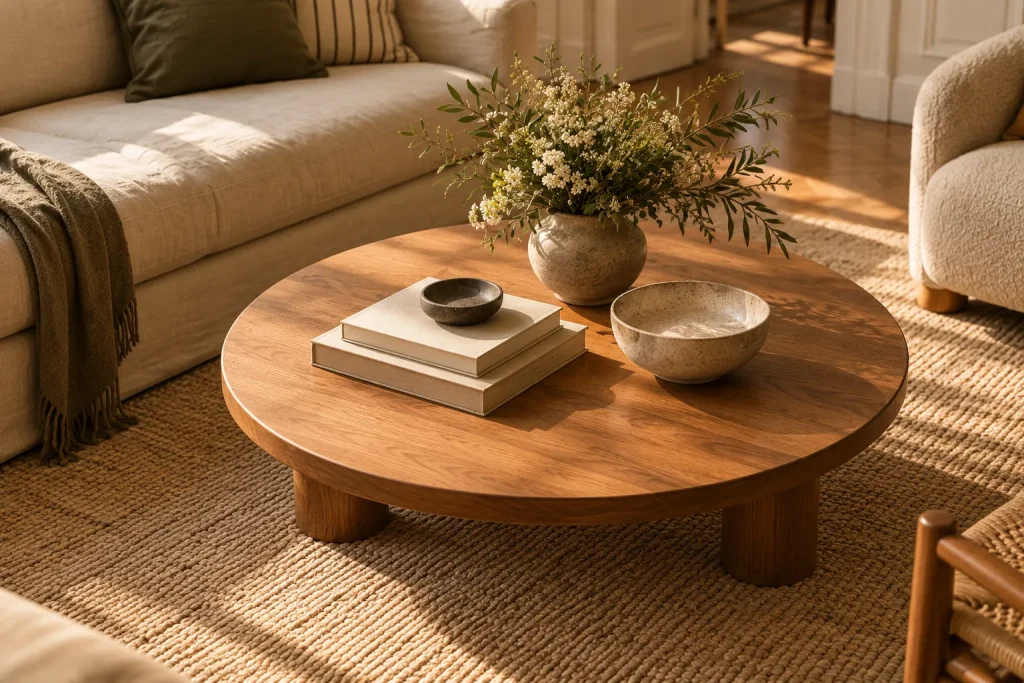
The rectangular shape of a book can make a circular tabletop feel more deliberate. Place a short stack slightly off center, with its long edge responding to the sofa or a nearby wall. That quiet line gives the eye an orientation without making the whole composition rigid. Keep the corners comfortably inside the table edge and away from the busiest reach path.
Choose books you want to open. Two substantial volumes can create a useful base, but a single beautiful book may be enough on a smaller table. If an object sits on top, make it light and easy to remove. The books should remain part of the room’s life rather than becoming a pedestal that nobody wants to disturb.
Balance Height without Blocking Conversation
Look at the arrangement from seated eye level before deciding that it needs more height. A vase that seems modest while standing can sit directly between two faces. Prefer a low vessel with an airy stem arrangement, or place the taller accent toward the less-used side. Leave the middle of the sightline open when people face one another.
Height can come from layers rather than a tall centerpiece. A book beneath a shallow bowl, the raised rim of a tray, and a small upright vessel create enough variation for many rooms. Keep the heaviest-looking object low. This makes the composition feel settled and gives finer elements space to stand out without requiring additional accessories.
Three Palettes for a Circular Table
Warm Wood and Chalky White
On a medium-toned wood table, combine a pale ceramic bowl with a linen-covered book and one darker accent. The contrast comes from texture as much as color: smooth glaze, woven cloth, and visible grain. Let one pale piece lead, then repeat that tone quietly elsewhere in the room so the tabletop feels connected to its surroundings.
Pale Stone and Soft Brown
A light stone or stone-look table can feel calm with a wooden tray and a small brown vessel. Keep their tones related rather than identical. If the surface has prominent veining, reduce the pattern on book covers and accessories. The table already provides movement, and plain objects allow those natural-looking lines to remain readable.
Dark Table and Muted Green
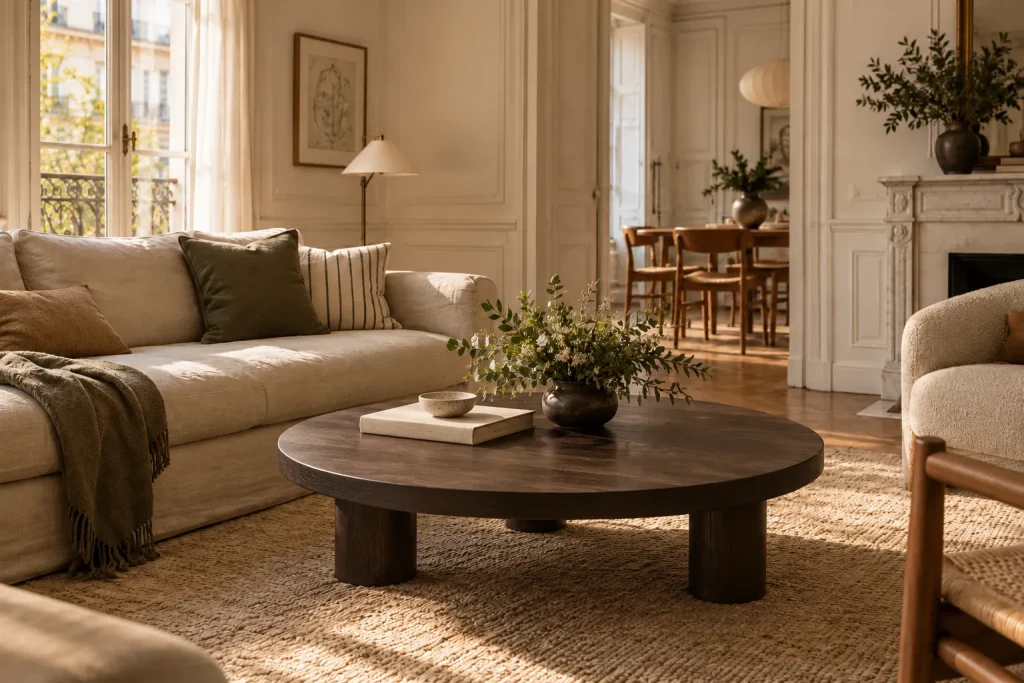
On a dark round top, a light book and a low green arrangement can create a clear focal point. Avoid scattering many small pale objects across the surface, which can become visually restless. Gather the lighter pieces into one area and leave a broad dark margin. A restrained green accent can echo plants elsewhere without turning the table into a miniature garden.
Adapt the Layout to a Small or Large Table
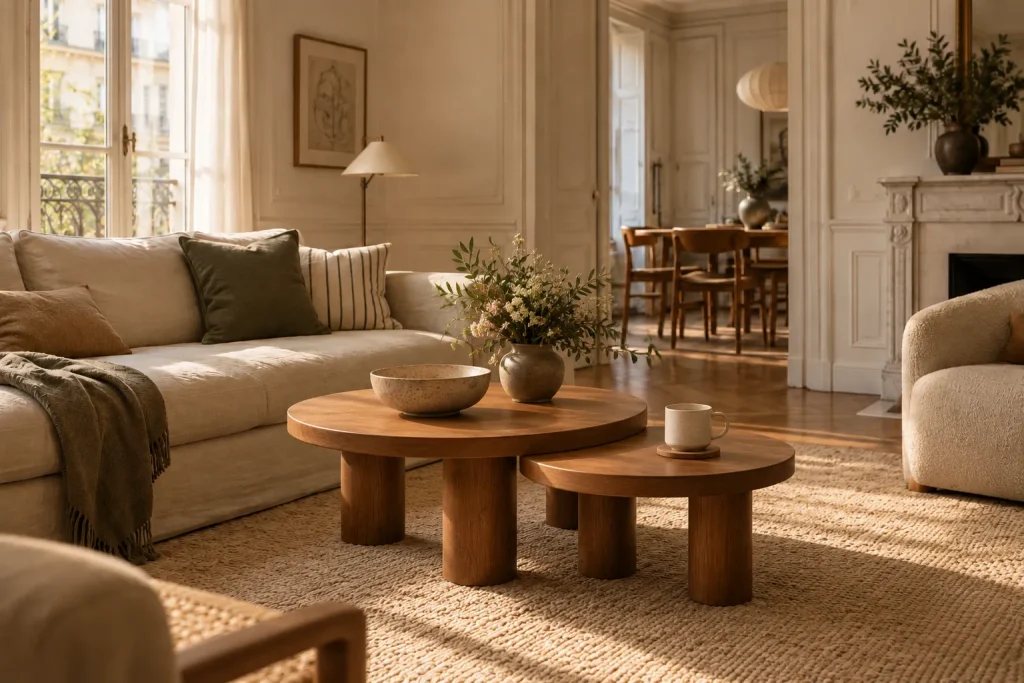
For a compact round table, start with one shallow bowl and a coaster. Add a book only if the usable surface still feels generous. A tray is optional: if it consumes the space needed for daily use, the bowl can provide enough containment on its own. Small-scale styling works best when the objects have distinct silhouettes rather than many tiny details.
On a larger top, increase the scale of the main group before increasing the number of groups. A slightly larger book or broader bowl usually feels more coherent than several unrelated clusters. If different seats need separate landing places, keep those areas clear and place the display between them. The arrangement should follow how the circle is shared.
With nesting tables, consider both surfaces together. Let one carry most of the decoration and keep the other available for a drink or reading. Duplicating a vase, bowl, and book stack on each table can make a light arrangement feel busy. When the smaller table moves, its role should remain obvious and its surface easy to use.
Correct the Layout before Adding More
If round coffee table decor feels unsettled, first check the spacing. Objects that nearly touch but do not quite form a group often create visual hesitation. Either bring them together intentionally or give them a more generous gap. Then check the edge: an accessory close to the perimeter may look precarious even when it is technically supported.
If the arrangement feels flat, change one height or silhouette instead of adding several new pieces. If it feels heavy, remove the largest opaque object and reassess. If the circle disappears beneath a large tray, reduce the footprint of the group. These small changes address the composition itself and often reveal that the room already contains everything it needs.
Frequently Asked Questions
Does a round coffee table need a round tray?
No. A round tray emphasizes the table’s curve, while an oval or rounded rectangular tray adds contrast. Choose a footprint that leaves useful space and keeps the circular edge visible. Test the actual outer dimensions before deciding.
Should the arrangement sit exactly in the middle?
Only if that position works for the seating. Centering feels composed and suits access from several sides. A slight offset can create a better landing area near the sofa, provided the group still feels balanced from other seats.
How many objects should I use?
Use as few as the table needs. Begin with one anchor and one supporting piece, then add a third only if it improves height, texture, or function. Count meaningful groups rather than treating every coaster or book as a separate styling requirement.
What belongs on a round table used every day?
A useful coaster, an accessible book, and a modest decorative accent are often enough. Keep the most frequently handled item easiest to reach. A display that needs constant dismantling is too complicated for that particular table.
Can the table look finished without flowers?
Yes. A sculptural bowl, visible wood grain, and a thoughtfully chosen book can provide shape and texture. Flowers are an optional accent, not the element that makes the arrangement complete.
Leave Room for the Everyday
A successful circular layout lets the table’s shape do some of the work. Gather a few pieces, keep an open arc where people reach, and assess the result from every seat. The best arrangement is one you enjoy looking at and naturally continue to use, with enough room for the small interruptions that make a living room feel like home.