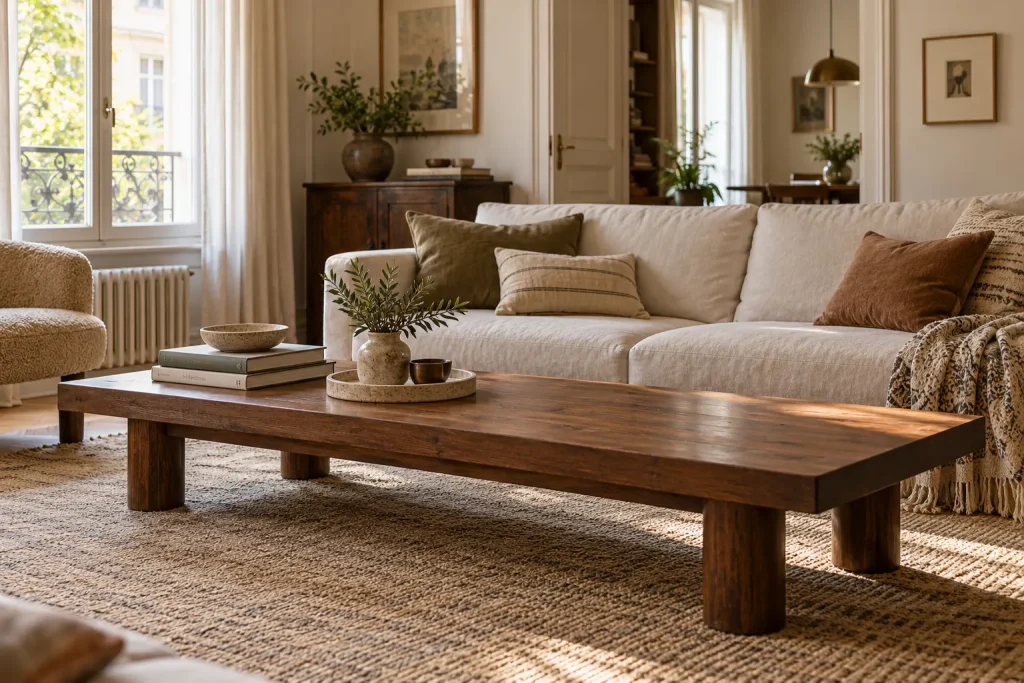
A long coffee table can hold a generous arrangement and still feel curiously unfinished. Place everything in the center and the ends seem forgotten; spread objects evenly across it and the surface becomes a procession of things. The most useful rectangle coffee table decor ideas give the length a rhythm: one main group, a quieter supporting area, and clear space where people naturally reach.
Start with the table’s daily role rather than a shopping list. A book beside the sofa, a low bowl farther away, and an open place for a cup may provide all the structure the room needs. The aim is to make each part of the surface feel intentional while keeping the whole arrangement connected.
Understand the Long Edge
A rectangular table often follows the line of the sofa, so its length becomes part of the room’s architecture. Notice how that line relates to the rug, the seating, and the route through the room. If several strong horizontal lines are already present, a few rounded accessories can soften them. If the room feels loose and layered, a neatly placed book stack can introduce order.
Sit at both ends of the sofa and check what is within comfortable reach. A display that looks balanced from the middle may leave one person reaching around a vase. Keep the most convenient landing space close to the seats used most often. The ends of the table can support decoration, but they should not become barriers between people and the surface.
Look across the Width as Well as the Length
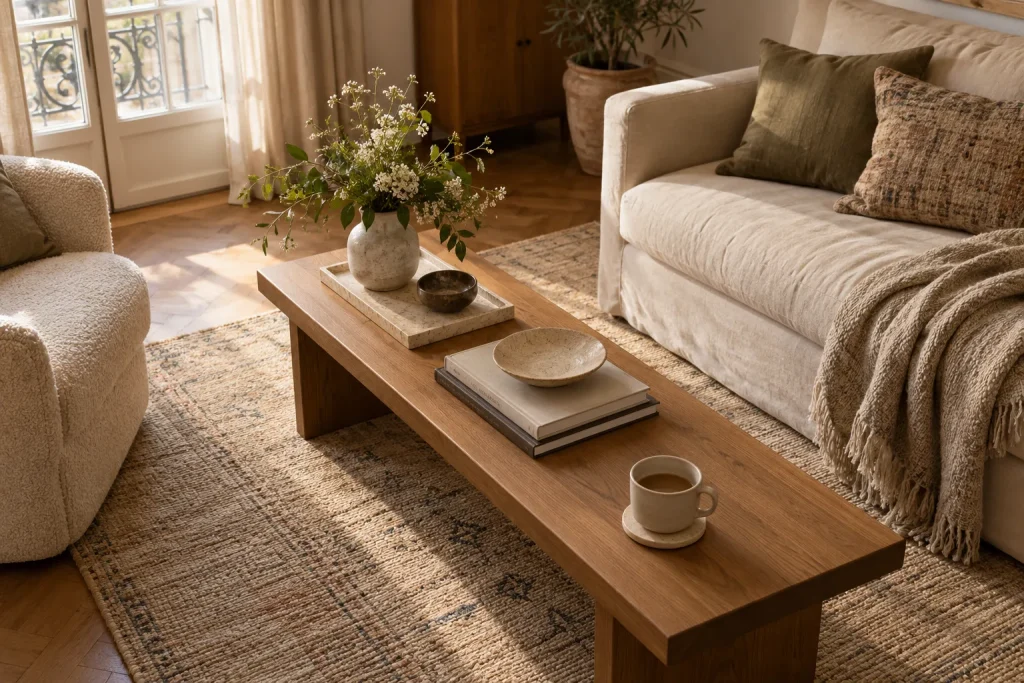
A narrow rectangular top has less room for front-to-back layering than a broad one. Keep its objects in a shallow band, with a clear strip on the sofa side. On a wider table, stagger the display gently in depth so it feels less like a straight row. The available width determines how much overlap the arrangement can comfortably accommodate.
Test the narrowest usable gap with a real coaster and cup. Small decorative spaces can look generous from above yet fail to hold everyday items. If the front edge remains crowded, move the display slightly back or reduce its depth. Do not rely on a guest finding the one tiny opening between a bowl and a book.
Rectangle Coffee Table Decor Ideas Built around Unequal Zones
Imagine two or three loose areas along the table, then give them different levels of emphasis. One might contain a short book stack and a small vessel. Another could hold a tray with coasters. The remaining area stays open. These zones do not need borders or equal dimensions; they are simply a way to avoid decorating every inch with the same intensity.
Begin with two zones if the table is modest in size. A main arrangement on one side and clear space on the other often feels more confident than three small displays. A very long table may support a quiet middle gap between two groups. Let the amount of usable surface, not a fixed styling formula, decide how many zones are needed.
Make One Group the Anchor
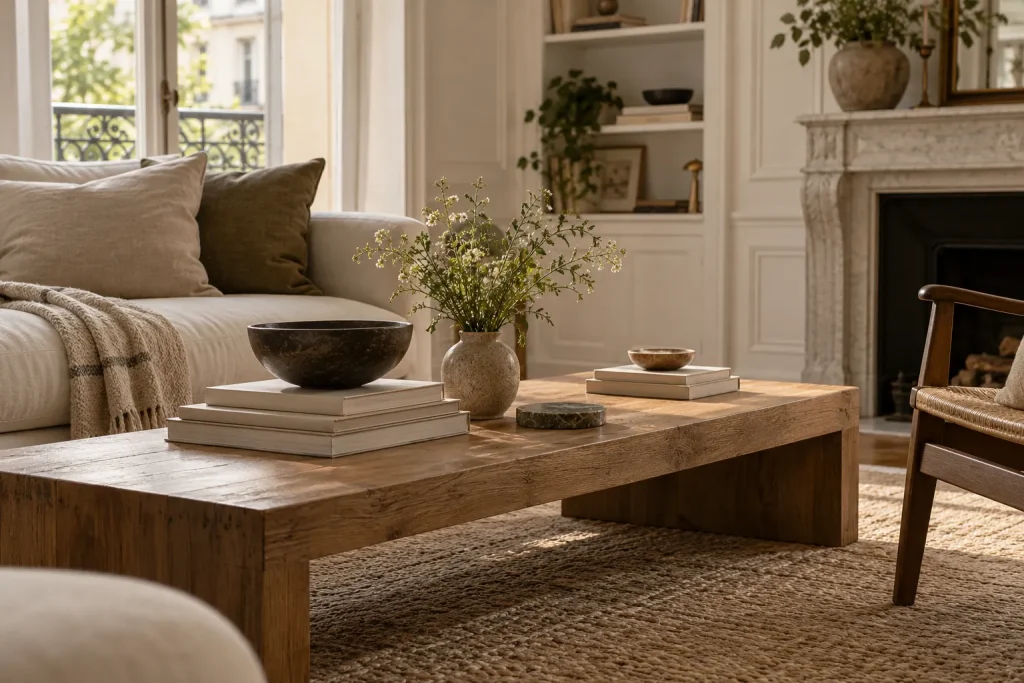
Choose the group with the strongest shape, color, or footprint to lead. A pale book beneath a dark ceramic bowl might provide enough contrast. Place a lighter supporting group farther along the table, then connect the two through a shared material or tone. This relationship gives the eye somewhere to begin without making both ends compete.
Equal groups can work in a deliberately formal room, but they are harder to keep relaxed. If you enjoy symmetry, repeat a material rather than duplicating every object. Two small ceramic pieces at different heights can echo one another while preserving variation. The table will feel considered without resembling a matched display in a shop window.
Set Books along the Table’s Direction
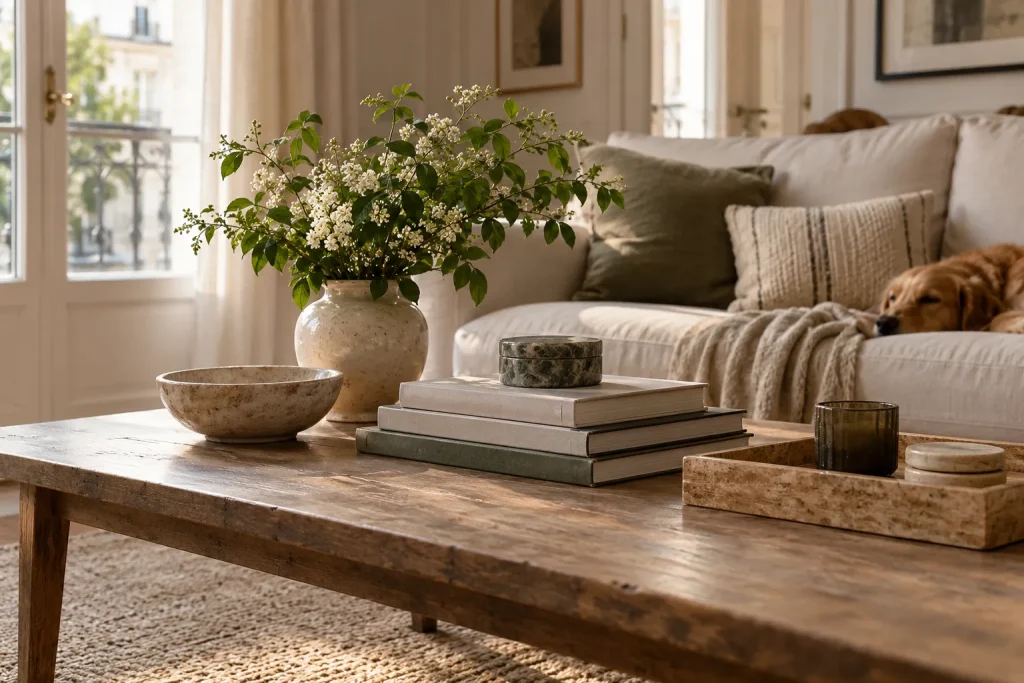
Books are particularly useful in rectangular coffee table decor because their edges respond to the furniture’s shape. Align a stack broadly with the long edge for a composed effect. A slight turn can soften the arrangement, but a sharp diagonal on a narrow top may use more space than it contributes. Keep the corners well within the tabletop.
Use the largest book at the bottom and keep the stack low enough to handle comfortably. Let the visible cover or spine contribute one color already present in the room. If you frequently open the top book, leave it unobstructed or place only a small removable object on it. The arrangement should make reading more inviting, not turn the books into inaccessible props.
On a particularly long table, resist creating a separate stack at every seat. One thoughtful selection can give the whole surface a point of interest. A second reading area is useful only when people genuinely use it. Otherwise, a clear stretch of tabletop may offer a better counterpoint to the first stack and make its materials easier to appreciate.
Use a Tray as One Zone, Not the Whole Table
A tray can define the practical area of the arrangement: coasters, a remote, and one small object gathered in a place that is easy to move. Choose an outer footprint that fits comfortably within the table’s width. A long tray can echo the tabletop, while an oval shape can soften the repeated straight edges.
The Living Room collection can help you compare the visual role of warm wood and pale stone-like finishes. A Haven walnut wood tray adds wood grain to a plain surface. An Alba travertine-look tray introduces a lighter appearance beside dark books or a darker table. Treat either as an optional material accent, then check the listed size against the space you want to keep free.
Once that zone has its place, the guide to coffee table tray decor ideas offers a closer look at arranging its contents. Keep the main table’s long rhythm in mind: a beautifully styled tray still needs a quiet gap and a useful neighbor.
Give the Tray a Clear Neighbor
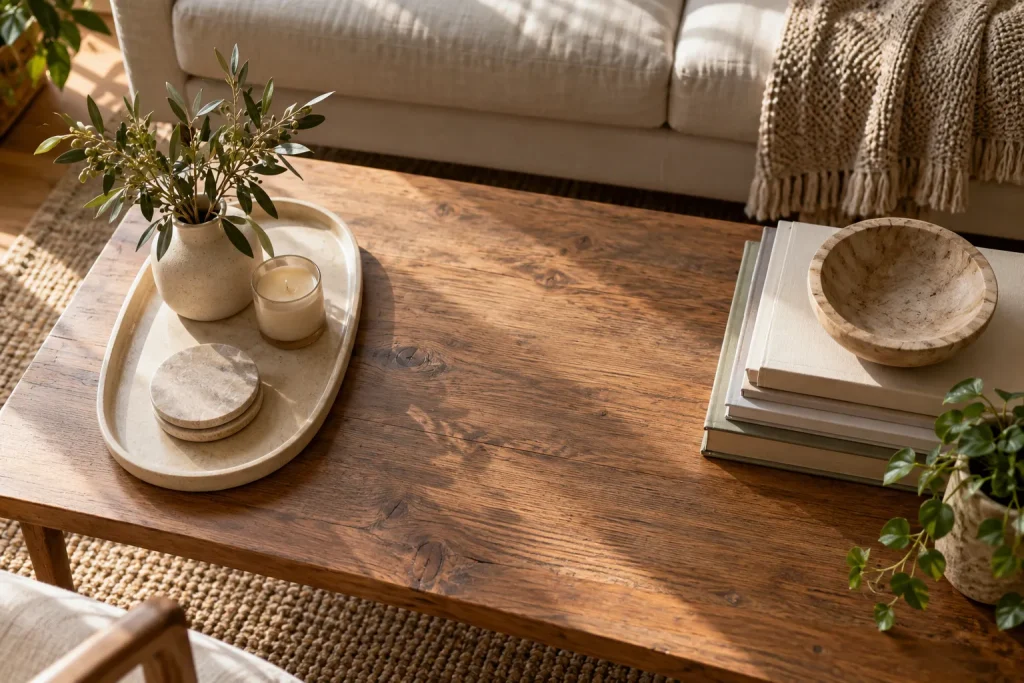
Leave an intentional gap between the tray and the next group. When a book nearly touches the rim, the two pieces can look accidentally crowded. Either let the book belong clearly to the same arrangement or separate it enough that both shapes read independently. A calm gap is especially valuable on a long surface, where it creates a pause between areas of detail.
Keep the tray practical by leaving space to pick up its contents. A remote buried under ornaments defeats the purpose of gathering it there. If the table is regularly cleared for a game, make sure the tray can be lifted comfortably and that the other group is equally simple to remove.
Add Height in a Staggered Sequence
Imagine the arrangement in profile. A low stack, a medium bowl, and a modest vase can create a gentle change of height along the length. Avoid placing the tallest piece in every zone or lining up several vessels of nearly identical size. Small differences often look more natural than an exaggerated rise and fall.
Check the tallest piece from the seating opposite it. An airy branch may appear light but still interrupt a conversation or screen view. Place it where it does not occupy an important sightline, or choose a shorter vessel. Decorative height should add depth to the room without becoming an obstacle to using it.
Three Ways to Give the Length Character
Quiet and Architectural
For a restrained room, use one substantial book, a low sculptural bowl, and a broad clear area. Keep the palette close to the table and sofa tones, then introduce contrast through matte and smooth surfaces. Align the book with the long edge so the arrangement reinforces the furniture’s clean geometry rather than fighting it.
Warm and Collected
In a room with layered textiles and wood furniture, combine a short stack of well-used books with a wooden tray and a ceramic piece. Vary the warmth of the materials slightly so they do not blend into one brown mass. A pale cover or soft white bowl can provide a welcome break while preserving the room’s gentle atmosphere.
Soft and Organic
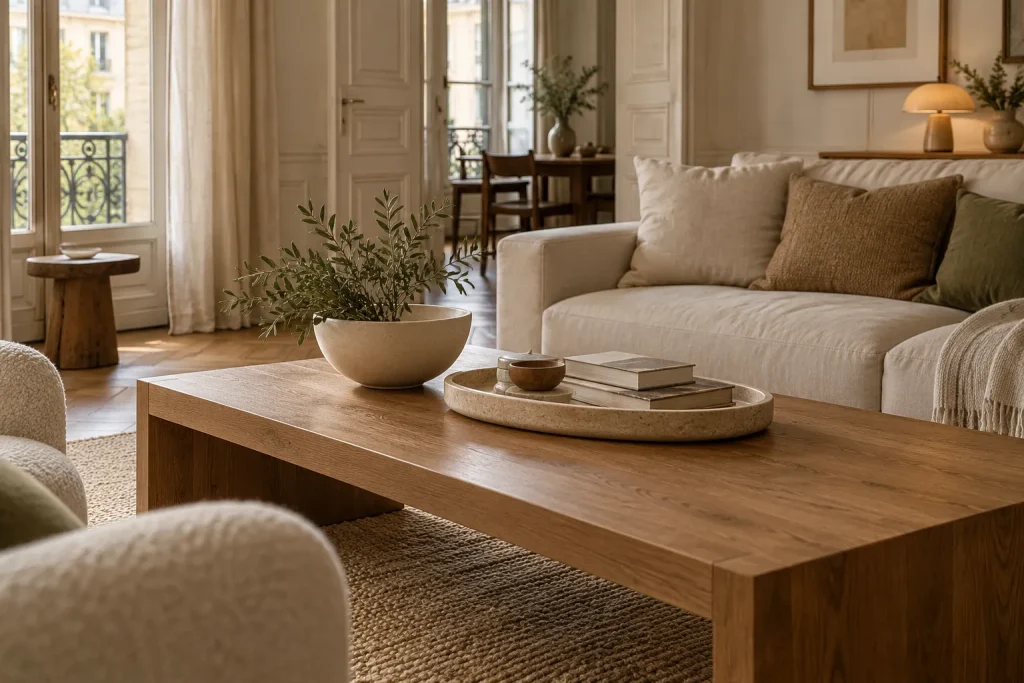
On a long table with strong straight lines, a rounded bowl and an oval tray can bring softness. Keep one element linear, perhaps the books, so the arrangement still relates to the furniture beneath it. A small green stem can connect the zones visually, but avoid extending branches across the useful landing space.
Adjust for Different Seating Arrangements
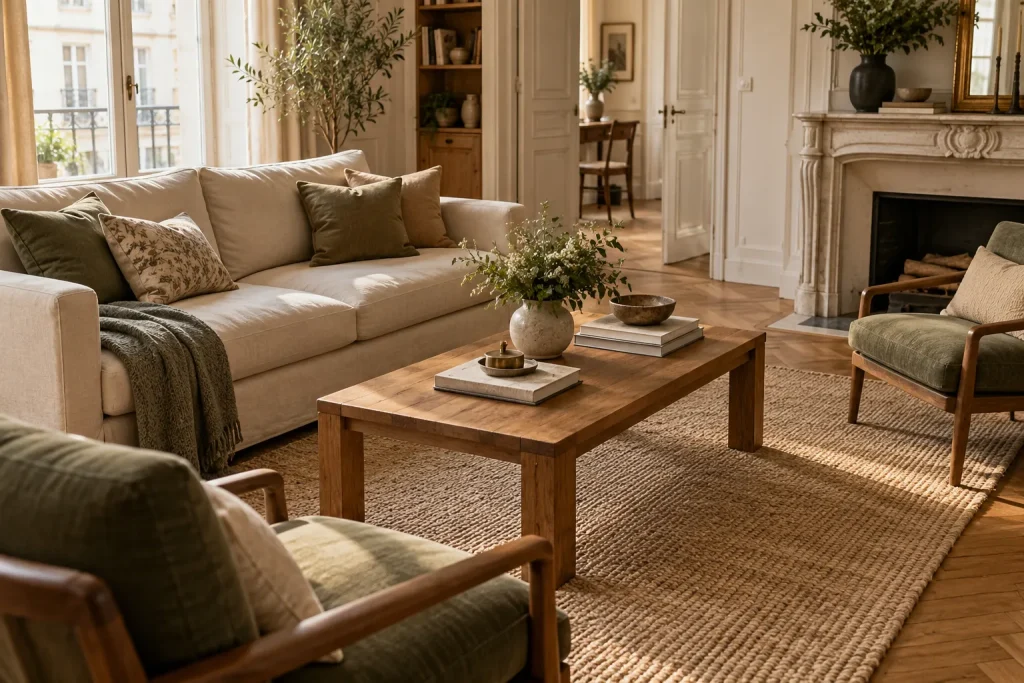
With a standard sofa, the display can sit slightly farther from the front edge, leaving a useful strip for cups and books. In an L-shaped seating area, access may come from two directions. Keep the corner nearest the sofa’s return clear rather than assigning it automatically to the tallest decorative object. The best-looking zone is not always the most convenient one.
When chairs face the sofa, give both long sides usable space. A narrower central band of decor may work better than a display pushed entirely to one side. If the table serves a busy family room, choose fewer pieces that can move in one or two actions. A beautiful arrangement should adapt easily when the room changes from quiet reading to shared activity.
For a table with a lower shelf, consider that shelf part of the view. Keep the top simpler if books or baskets are visible below. Aligning every upper object with another directly beneath it can feel heavy; allow some open space to carry through both levels. The furniture should retain a sense of structure rather than becoming two crowded displays.
Solve the Most Common Layout Problems
If the table looks like a straight line of accessories, gather two related pieces into one group and remove another. If both ends feel heavy, make one quieter. If the middle feels awkwardly empty, bring the groups slightly closer together before adding anything. Rectangle coffee table styling usually improves through better relationships rather than a larger collection of objects.
If the arrangement appears too small, increase the scale of one anchor instead of multiplying small ornaments. If it feels formal, loosen one alignment or vary a height. If it looks untidy, check whether everyday items have a clear home. A defined place for the remote and coasters can make the decorative pieces feel more intentional without hiding the room’s ordinary life.
Frequently Asked Questions
Should a rectangular coffee table have three groups?
Only when its size supports them. Two areas, including one left mostly clear, are often enough. Think in terms of useful zones and visual emphasis rather than dividing the table into equal thirds.
Is a rectangular tray the best choice?
It can reinforce the table’s shape, but an oval or round tray may add welcome contrast. Check the outer footprint against the table’s width and leave comfortable landing space beside it.
Where should the tallest object go?
Place it where it adds depth without blocking a seated view. That is often toward the farther side of the main group, but the seating arrangement matters more than a fixed position.
Can I decorate just one end?
Yes, especially on a smaller or frequently used table. Give the decorated area enough presence to feel intentional and keep the open end genuinely useful. An accessible book or coaster can provide a quiet connection between them.
How do I make a long table feel less crowded?
Remove repeated objects, widen the gaps between groups, and keep one continuous landing area clear. A few larger, distinct shapes often read more calmly than many small accessories spread across the length.
Let the Length Create a Rhythm
A rectangular table feels balanced when its groups have different roles and enough space between them. Anchor one area, soften the straight lines where needed, and preserve easy access from the seats around it. The result should invite a cup, a book, and a conversation without requiring the whole arrangement to be rebuilt.