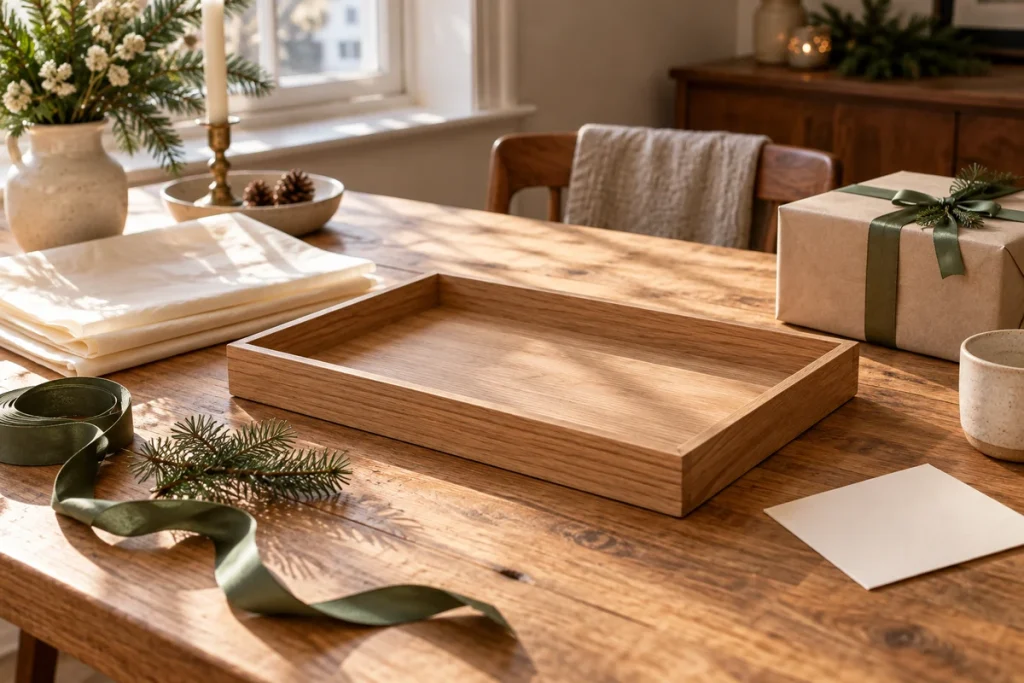
Choosing a wooden tray for gift giving starts with a small observation about someone’s home. Perhaps they always leave their glasses beside a book, keep a few favorite scents on a dresser, or clear the same corner of the kitchen each morning. A tray can give that familiar habit a more considered place without asking them to change the room around it.
Christmas makes the choice feel personal, but the most useful clues usually come from everyday life. Notice the surfaces they use, the colors they return to, and how much they enjoy arranging objects. A simple gift can feel thoughtful when its size and purpose suit the person receiving it.
This guide looks at how to choose the shape, material description, quantity and presentation of a tray gift. Begin with the recipient’s routine, then use the current product details to narrow the choice.
Choose a Wooden Tray for Gift Giving around a Real Routine
Think of one place where the tray might belong. A bedside surface needs room for a lamp, while a dresser may already have a group of small bottles that would benefit from a boundary. The idea becomes clearer when you can describe the ordinary action the gift supports: setting down jewelry, gathering desk accessories, or keeping a small decorative arrangement together.
Avoid assigning a new routine to someone simply because it looks attractive in a photograph. A person who prefers clear counters may appreciate a compact piece for occasional use. Someone who enjoys rearranging a sideboard may welcome a more expressive outline. Both approaches can be considered choices when they follow what you know about the recipient.
If the intended place is a living room, look at our coffee table tray decor ideas for examples of useful grouping. Let the recipient’s own room determine how much of that idea to borrow. A gift should work with their belongings and the space already available.
Read the Wood Description before Choosing the Color
Wood tones vary from pale honey to deeper brown, and the same photograph may look different on another screen. Start with the named material and product description, then consider the visible color and grain. A warm surface can echo existing furniture without needing to match it exactly.
Do not assume that every wooden-looking tray has the same construction or species. A wood-and-resin design is a mixed-material piece; a bamboo set has its own named material. If a specific timber matters to the recipient, look for that information in the listing rather than inferring it from the color.
The same care applies to the finish. A photographed sheen does not establish a particular coating, resistance to water, or method of care. Choose a product whose stated use fits the recipient’s routine, and pass along the supplied care instructions with the gift. That is more helpful than inventing a maintenance rule from appearances.
Match the Shape to What They Already Own
A Round Outline for a Small Decorative Group
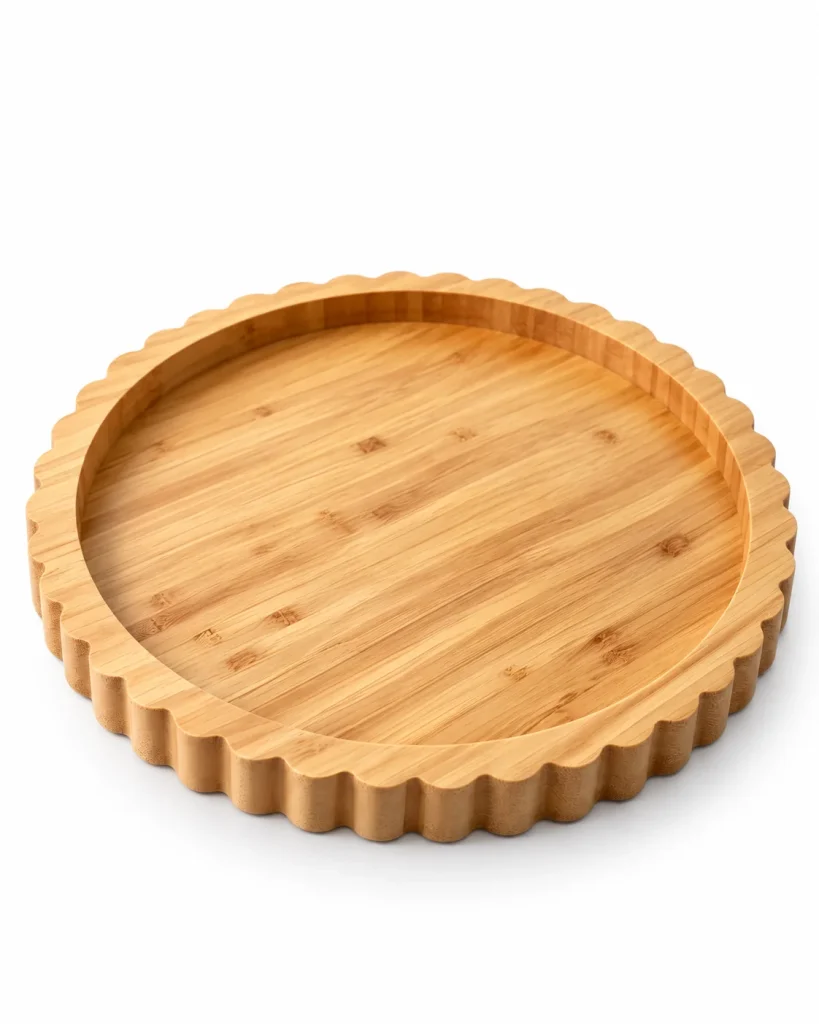
A circular tray can bring a few differently shaped belongings together on a dresser or side table. Its curve may feel especially at home beside a rectangular book, mirror or cabinet. Look for a size that gives the objects breathing room instead of filling every part of the surface.
The Round Scalloped Wooden Tray introduces a gently shaped rim around a round interior. Its listing presents it with perfume, jewelry and decorative objects. Consider it for someone who enjoys a visible decorative detail, then check the current measurements and contents before deciding where it will sit.
The shaped edge is part of the object’s presence. Leave enough surrounding space for that outline to read clearly, particularly beside a lamp base or another rounded vessel. A narrow gap can make an otherwise pretty arrangement feel compressed.
Rectangles for Flexible Daily Tasks
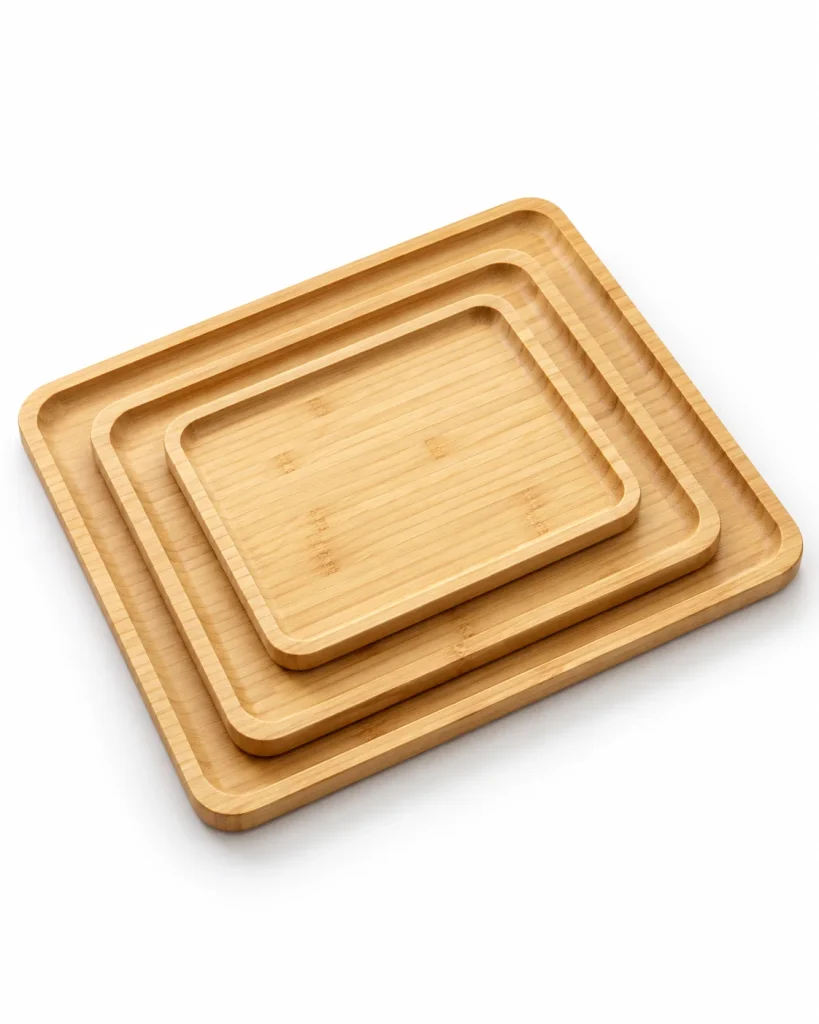
A rectangular tray can suit a shelf, desk or longer countertop. Compare its usable base with the belongings it may hold, and look at the full outer footprint as well. Corners, rims and handles can occupy space beyond the central area shown in a styled photograph.
The Bamboo Serving Tray Set of 3 includes large, medium and small trays that nest together. Its listing suggests drinks, plated treats and organizing uses. For a gift, the useful question is whether the recipient would enjoy several sizes or would prefer one dedicated decorative piece.
Treat the word “set” as a quantity to check, not a reason to assume better value for everyone. Several trays can support different tasks, but they also need a place when unused. Their usefulness depends on the home and habits you are choosing for.
Check Size without Spoiling the Surprise

When you know the room well, estimate the available area from a familiar object, then confirm the product dimensions before ordering. A notebook, existing tray or placemat can help you picture the footprint. If the measurements remain uncertain, favor a clearly defined small task over a large statement intended for an unknown surface.
Consider what must remain beside the tray. A bedside lamp still needs room, and a dresser drawer should open without moving a gift arrangement. If the intended recipient works at a compact desk, preserving writing space may matter more than adding another decorative layer.
The outer measurement is only part of the picture. A shaped rim reduces the interior area available for bottles or other objects. Look at the relationship between the edge and the usable center, especially if you are choosing for one particular collection of belongings.
Decide between One Piece and a Nesting Set
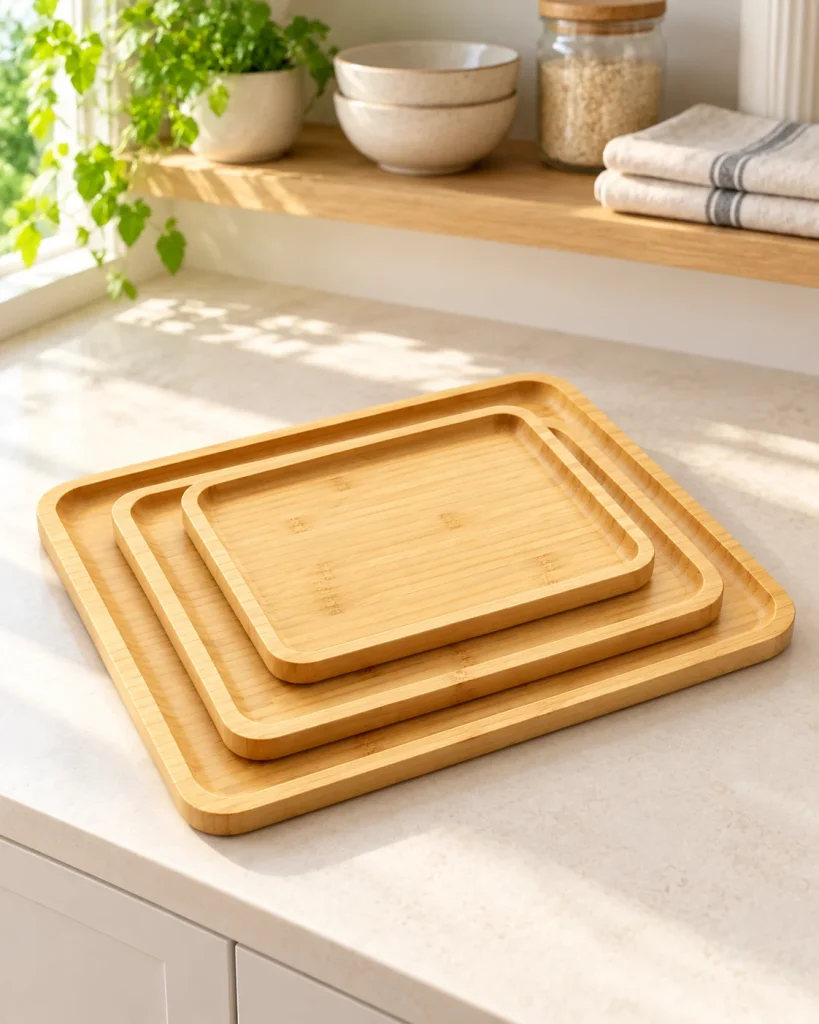
A single tray can feel complete when it has one obvious home. It is easy to explain in a note: a place for the recipient’s bedside book and glasses, or a small boundary for the scents they use each morning. The clarity of that purpose often matters more than the number of pieces in the box.
A nesting set can suit someone who enjoys changing arrangements or has several small tasks to organize. Before choosing it, think about where the pieces would live together and apart. The ability to nest is useful only when the recipient wants to store them that way.
Keep the photographed styling separate from the supplied contents. Cups, bottles, ornaments and greenery may show possible uses without being included. Read the quantity and product description carefully so the gift you imagine matches what will arrive.
Let Christmas Shape the Wrapping
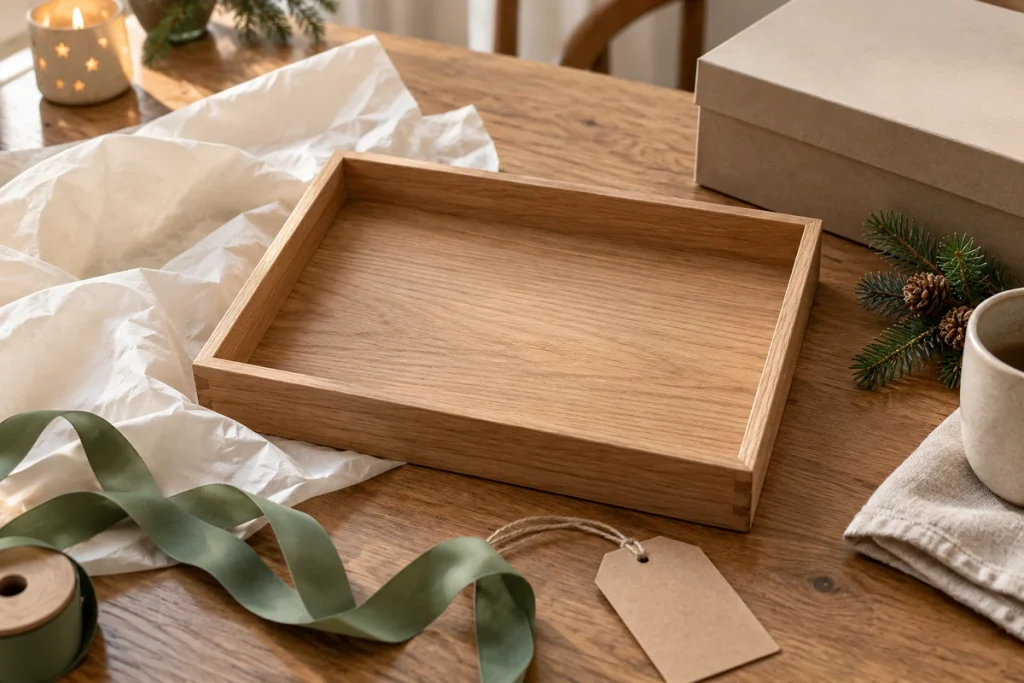
A neutral tray can feel seasonal through its presentation. Tissue, a plain ribbon and a short handwritten note can make the exchange feel considered while leaving the object easy to use in January. Choose wrapping that protects the shape and fits the actual product rather than relying on a decorative photograph of a packed gift.
If you add another small present, keep it separate and contained. A wrapped item or sealed packet can accompany a tray without assuming anything about direct food contact. Avoid loose decorations that might transfer color, scratch a finish or leave the recipient with extra cleanup before using their gift.
There is no need to build a large arrangement inside the tray. A single note explaining why it reminded you of their home can carry the personal part of the gift. Leave space for the recipient to decide how the piece belongs among their own things.
Make the Gift Easy to Receive
Think about the practical handover as well as the purchase. Someone traveling home may prefer a manageable package, while a gift sent directly needs accurate recipient details and a clear understanding of the current shipping conditions. Check those conditions for the relevant destination before depending on a particular arrival date.
Retain the product information and any applicable exchange details in a form the recipient can use. Preferences around size and color are personal, even when you know a home well. A thoughtful gift can include the freedom to make that final choice.
Our Gifts for the Home guide brings together the current gift selection. Use it to compare available pieces after deciding what matters for your recipient; prices, options and delivery guidance should be checked there when you are ready to order.
Picture the Tray after the Holidays

Imagine the wrapping removed and the seasonal decorations put away. The gift should still have a plausible place on a shelf, dresser or table. Warm wood and a considered outline can sit alongside existing ceramic, linen and glass, but the arrangement will feel most natural when it follows the recipient’s habits.
For someone who enjoys decorating by the door, our Christmas entryway decor guide shows how a seasonal accent can share space with everyday arrivals. Borrow the principle of leaving a useful landing area, without expecting a gift to require a complete room change.
When you want to compare further shapes, browse the full tray collection. Return to the one place and routine you identified first. That small piece of context will help you choose among a wider selection without losing the personal reason for the gift.
Frequently Asked Questions
How do I choose a tray when I do not know the room measurements?
Choose for a modest, recognizable task rather than an entire table arrangement. Confirm the product’s outer dimensions and consider a familiar object for scale. If the intended location is still uncertain, avoid treating a large statement piece as a guaranteed fit.
Should I give one wooden tray or a set?
One piece suits a clear, dedicated purpose. A set can work for someone who enjoys flexible organizing and has storage for the extra pieces. Let the recipient’s habits guide the quantity rather than assuming more pieces will always be more useful.
Does a wooden appearance establish the material?
No. Read the named material and construction in the listing. Bamboo, a named wood species, and a wood-and-resin design are different descriptions. Do not infer a species, finish or care routine from a photograph alone.
Can I include food with the gift?
Keep any edible addition sealed or on its own suitable plate or container, and follow the product’s stated use. A styling scene does not establish that every tray is intended for direct contact with food or for hot cookware.
How can the gift feel Christmassy without being limited to Christmas?
Use the wrapping and note to carry the seasonal feeling. Choose the tray around an everyday use, then let the recipient decide how to style it after the holidays. A useful piece can keep the thought behind the gift visible throughout the year.
Choose for the Person and the Place
A considered tray gift does not need an elaborate presentation. Notice a familiar habit, choose a shape and quantity that fit it, and check the details that will matter in use. That combination gives a simple Christmas present a personal connection to the home receiving it.