
Christmas often brings more activity into the living room: visitors, shared drinks, wrapping paper, and evenings spent close together. Coffee table Christmas decor works best when it welcomes that activity. A small seasonal arrangement, a few natural textures, and an open landing area can make the room feel festive without taking over the surface everyone uses.
Begin with the table as it already functions. Keep a favorite book or useful tray, then add one clear seasonal gesture: a modest evergreen arrangement, a shallow bowl of ornaments, or a soft ribbon tied around a simple vessel. The result can feel thoughtful and warm while leaving space for the ordinary pleasures of the season.
Let the Room Set the Seasonal Scale
Look at the whole seating area before decorating the table. A nearby tree, a garland on the mantel, or lights around a window may already provide plenty of detail. In that setting, the coffee table can be a quiet pause. A smaller arrangement often connects the room more gracefully than another full display competing for attention at its center.
If the living room has little other seasonal decoration, the table can carry a stronger accent. Increase the presence of one element rather than adding many unrelated ones. A low branch arrangement or a broader bowl of ornaments can establish the mood while keeping the surrounding surface calm. The table should still belong to the room after the decorations arrive.
Start with What You Want to Keep Using
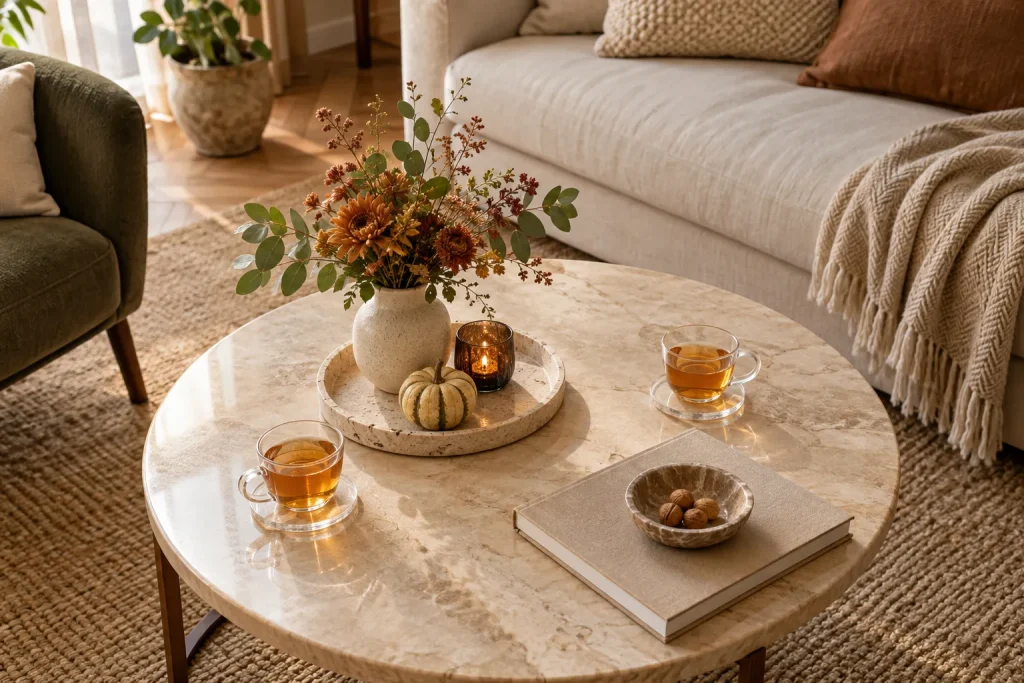
Place the everyday essentials first: coasters, an accessible book, and a comfortable area for drinks. Then find the space available for decoration. This order prevents the seasonal display from pushing useful items into awkward corners. It also makes the arrangement easier to live with through several weeks rather than only for a photograph.
Test the surface as if guests were already seated. Set down a few empty cups and see whether each person has somewhere obvious to place one. If the decorations need moving immediately, reduce their footprint or gather them into a single movable group. A welcoming table gives people permission to use it without asking where everything belongs.
Coffee Table Christmas Decor with One Seasonal Anchor
Choose one main seasonal element and let the rest support it. A shallow bowl with a small selection of ornaments feels different from a low vessel with greenery, but both can create a clear focal point. Combining every familiar Christmas symbol in one arrangement usually makes the table harder to read and leaves less room for daily use.
Keep the anchor low enough that people can see across the table. A tall miniature tree may be charming in another part of the room, yet interrupt conversation at the center of the seating area. Try it on a sideboard if it dominates the view. The coffee table often benefits from a lower, more intimate version of the same seasonal mood.
Repeat a Color, Not an Entire Display
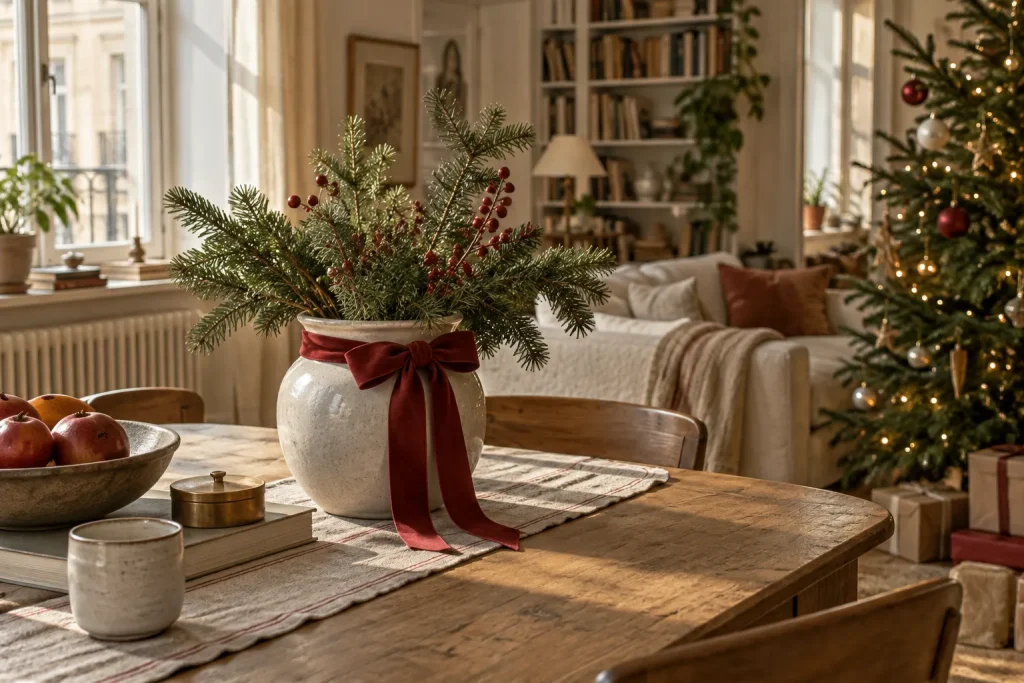
Borrow one tone from the tree or mantel and carry it onto the table. A muted red ribbon, warm brown ornament, or soft brass-colored detail can create a connection without reproducing the whole palette. Keep the remaining pieces close to the room’s everyday colors so the seasonal addition feels integrated rather than temporarily imposed.
This approach also makes a mixed collection easier to use. Choose a few decorations that share a tone or finish, and leave the rest for another location. You do not need a complete matching set. A small edit often lets older, meaningful pieces feel more deliberate and gives their details room to be noticed.
Bring in Natural Texture with a Defined Boundary
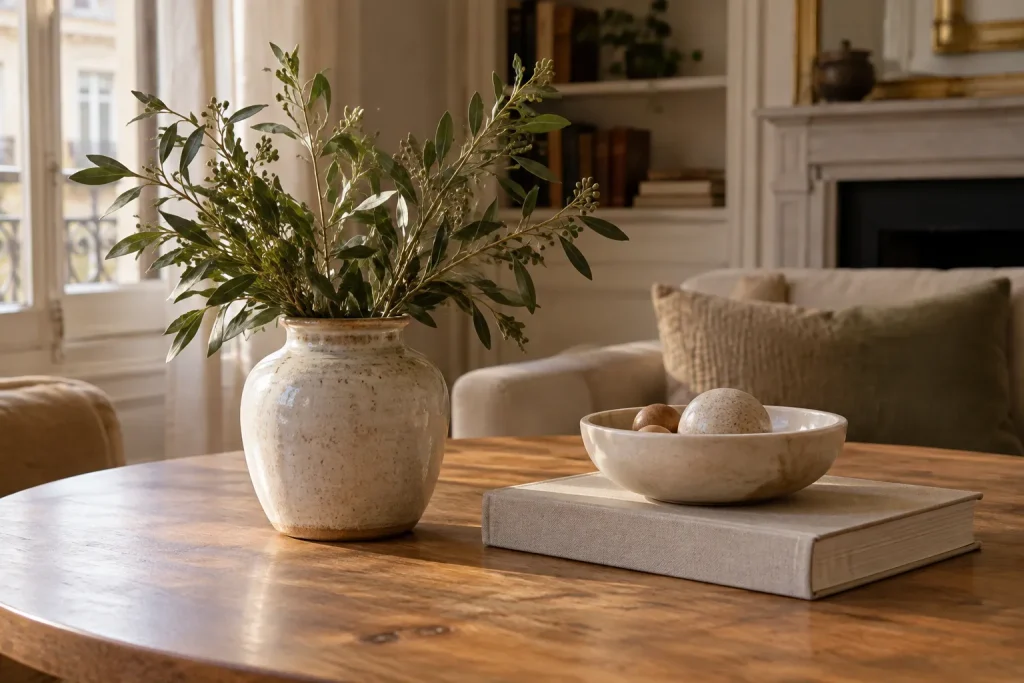
Wood, woven fabric, paper, and greenery can soften a seasonal arrangement without requiring a rustic theme. Pair a smooth ornament with a linen-covered book, or a small branch arrangement with a simple ceramic vessel. Let the contrast between surfaces do the work. Several rough textures together can become visually busy, especially on a strongly grained table.
Fresh greenery can shed and may leave moisture or residue, so keep it in a suitable container rather than spreading it directly across books or finished furniture. A contained arrangement is easier to inspect and remove. If fresh foliage is impractical for your household, a restrained reusable alternative can provide the same visual line without pretending to be a freshly cut botanical display.
Keep the Surface around the Greenery Clear
Let branches rise or spread within the decorative group’s footprint rather than extending across the place reserved for cups. A stem that looks delicate may still catch a sleeve or interfere with reaching. Turn the vessel and check it from each seat. Trim or reposition the composition visually so the table remains comfortable to approach.
Choose plants and decorative materials appropriate to the people and animals in the home, and check suitability before bringing unfamiliar foliage indoors. Natural appearance alone does not establish that a material is appropriate for every household. A simple branch-free arrangement with wood, paper, and ceramic can be equally seasonal when that is the more practical choice.
Use a Tray for a Display That Can Move

A tray can hold a compact seasonal group and make clearing the table more straightforward. Keep it light enough to lift comfortably, with room to grasp the edges. A small vessel and a few contained ornaments may be all it needs. If the tray becomes packed with objects of different heights, removing the display may be less convenient than it first appears.
For a quiet material foundation, explore the Living Room collection. A Haven walnut wood tray brings warm grain beside pale ornaments. An Alba travertine-look tray offers a light stone-like appearance beneath darker seasonal accents. Both can be considered as visual starting points; check their listed dimensions and care guidance before planning the arrangement around them.
Set aside a suitable place for the whole group when the table is needed for a game or shared activity. That might be a nearby console with enough room, rather than the floor beside the sofa. A movable arrangement is most useful when its temporary destination has been considered in advance and does not block another everyday function.
For the everyday foundation beneath the seasonal layer, these coffee table tray decor ideas offer guidance on grouping useful pieces. Add only the Christmas accents that suit that arrangement, so it can return to its ordinary role when the season ends.
Add a Gentle Evening Glow
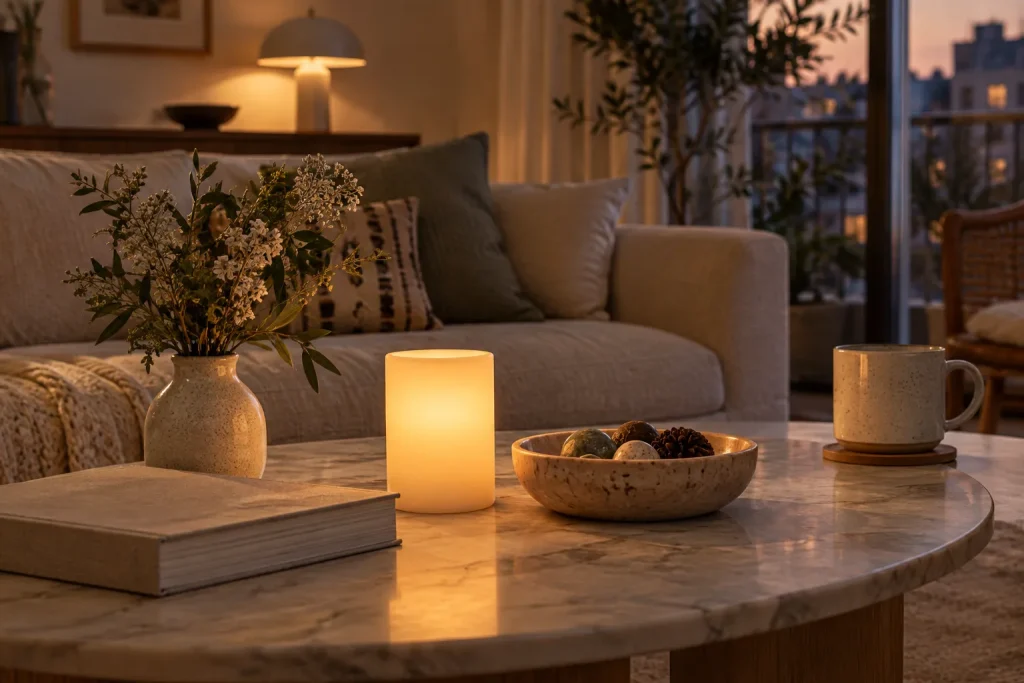
Warm light can make a small display feel complete after dark. A battery-operated candle or modest decorative light can provide an evening focal point without requiring an open flame among books, ribbon, and greenery. Choose a scale that belongs to the arrangement and keep any battery compartment secure according to the product instructions.
Place the light where it adds depth rather than reflecting directly into someone’s eyes. On a glass table, check the view from the sofa because reflections can multiply the effect. If a light has a cable, choose another location rather than trailing it across the walking route or the usable tabletop. Seasonal atmosphere should not depend on an awkward setup.
Three Christmas Coffee Table Decoration Ideas
Woodland Tones without the Clutter
Combine a warm wooden base, a small green accent, and a few brown or cream ornaments contained in a shallow bowl. Keep the surrounding table clear and let the wood grain remain visible. A single linen ribbon can soften the group. The effect comes from the relationship between materials, not from covering the whole surface with woodland objects.
Pale Ceramic and Soft Metallic Detail

For a lighter room, use a white or cream vessel with one restrained metallic accent. A pale book can connect the arrangement to the everyday decor, while a little dark greenery adds definition. Avoid several highly reflective pieces competing with one another. One warm glint is often enough beside the room’s existing lamps or tree lights.
Muted Red with Natural Wood
Introduce red in a small, deliberate way: a ribbon, one ornament, or a book cover already in the room. Pair it with wood and quiet neutral textures so it feels rich rather than loud. Repeating the red once elsewhere can connect the table to the tree or mantel without requiring every accessory to join the same color scheme.
Adapt the Display for Guests and Everyday Evenings
For a quiet evening, a book and a modest seasonal group may sit comfortably together. When guests arrive, reduce the decorative footprint and bring the coasters forward. Keep serving items separate from ornaments and other decorative objects. A decorative tray should not be assumed suitable for direct food contact; use appropriate serving ware for that purpose.
On a small table, one contained seasonal accent may be enough. Move extra decoration to a shelf or mantel and preserve the tabletop for people. On a larger table, leave clear space between the seasonal group and the everyday reading area. The separation helps both remain understandable, particularly when cups and other temporary objects appear during a gathering.
In a busy household, avoid loose tiny decorations, fragile pieces, or trailing ribbons where they can easily be reached or disturbed. Choose the arrangement for the way the room is actually used. A low, simple display can feel just as considered as a more elaborate one, and it is often easier to reset at the end of the day.
Refresh the Arrangement through the Season
Check the display as part of the normal room reset. Remove shed material, wipe up moisture promptly according to the furniture’s care guidance, and return everyday objects to their places. Replace or remove greenery when its condition changes. The table will look better with one fresh-looking element than with a fuller arrangement that has become tired or difficult to maintain.
When considering ideas for decorating a coffee table for Christmas, think about the transition afterward too. Keep the everyday foundation visible: the book, bowl, or tray you will continue to use. Removing the ornaments and ribbon should leave a coherent arrangement rather than an empty patch that needs a completely new design. Seasonal styling can be a light addition to the room’s existing character.
Frequently Asked Questions
What is the simplest Christmas coffee table arrangement?
A low bowl of a few ornaments beside an accessible book can be enough. Keep a clear landing area and use colors already present in the room. One recognizable seasonal accent often creates more calm than several competing themes.
How do I decorate a small coffee table for Christmas?
Choose one compact group and keep the rest of the surface useful. A small vessel or contained ornament arrangement may work better than a large tray. Move additional decorations to another surface rather than shrinking every object to fit.
Do I need fresh greenery?
No. Wood, paper, ceramic, ribbon, and reusable decorations can create a natural-feeling palette without fresh foliage. Choose materials that suit your household and the amount of maintenance you want during the season.
How can I add light without a candle flame?
Use a suitable battery-operated candle or decorative light, following its instructions. Keep the setup contained and the battery compartment secure. Check the seated view so the glow feels comfortable and does not create distracting reflections.
Can the arrangement stay after Christmas?
Yes, if its foundation is part of your everyday room. Remove distinctly seasonal ornaments and ribbon, then keep the books, tray, or simple vessel. A restrained base makes that transition easy.
Make Space for the Season’s Ordinary Moments
Christmas styling feels most welcoming when the room remains easy to share. Choose a modest seasonal anchor, connect it to the wider palette, and keep enough space for a cup or an open book. Natural textures and thoughtful editing can give the table a festive presence while leaving its everyday purpose intact. Carry this balance through coffee table decor ideas and entry way christmas decor.