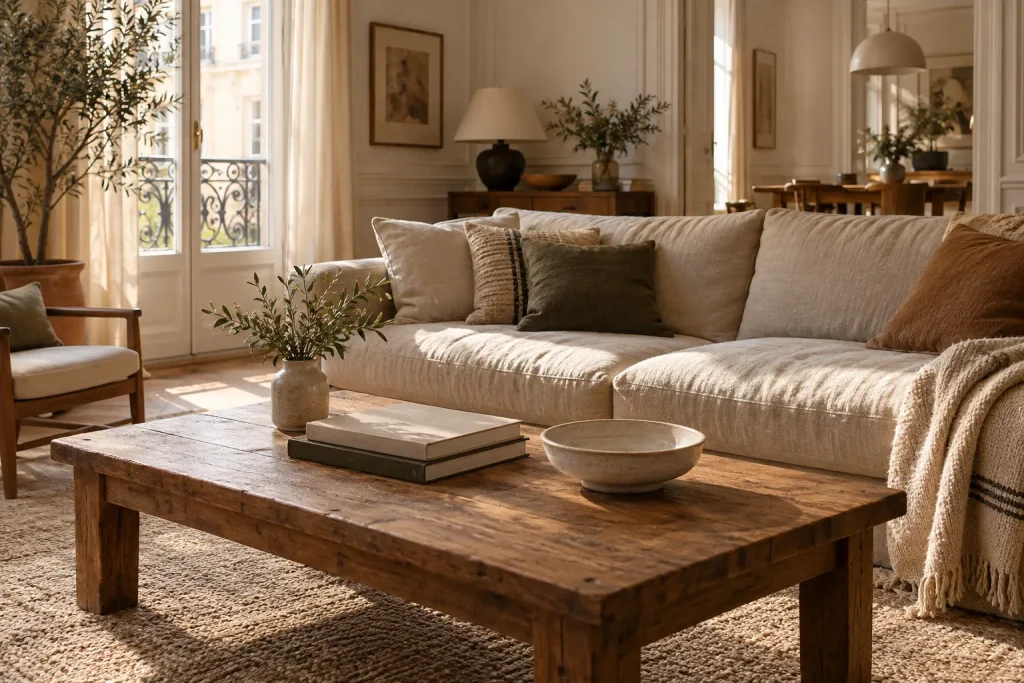
The best coffee table book decor begins with books you want to open. Their covers, proportions, and subjects can give a living room character, but their real value is the invitation to pause and look through them. A small, accessible selection feels more personal than a tall stack chosen only to match the sofa.
Start with two or three books you enjoy, then decide how they fit the table’s daily life. Give the stack a stable base, leave space to lift a cover, and choose any companion object with care. The arrangement should make reading easier while adding a considered layer of color and texture to the room.
Choose the Books before Choosing the Palette
Look first at the subjects you return to: architecture, gardens, photography, travel, or an artist whose work you love. A cover does not need to match the room perfectly if the book belongs to your life. Often one unexpected color makes a neutral seating area feel more specific and less arranged for appearance alone.
Lay a few candidates on the table and compare their sizes. A broad volume can anchor a generous surface, while a smaller book may suit a compact table or a narrow landing area. Thickness matters as well as width. Several substantial books quickly create a tall block, so begin with fewer than you think you need and add only when the composition benefits.
Let One Cover Lead
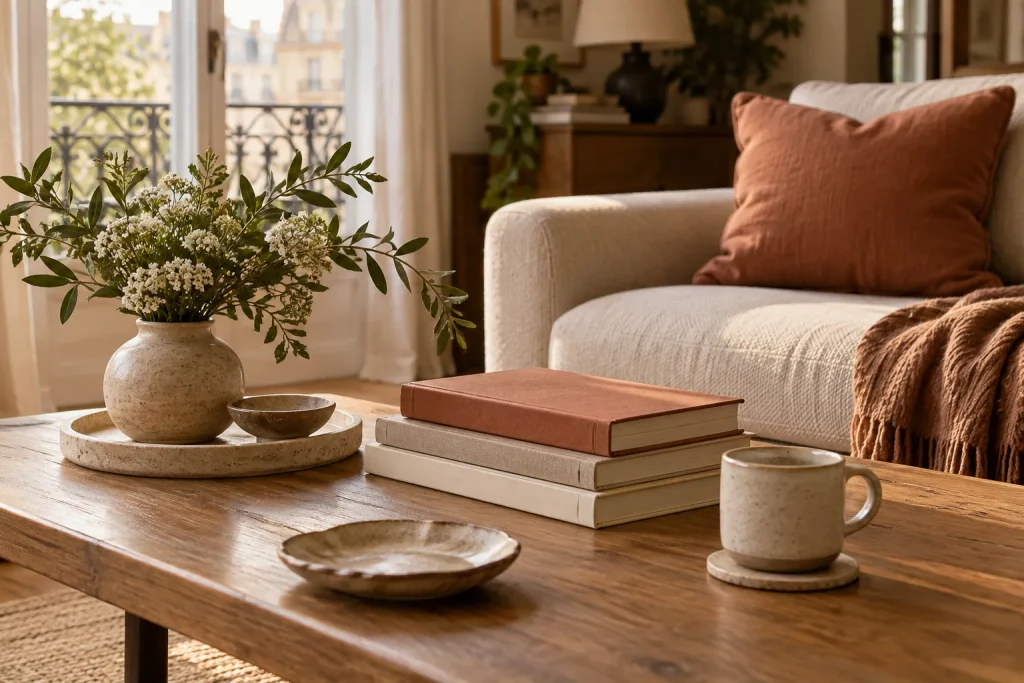
Choose one visible cover or spine as the main color note. The other books can support it with quieter tones, related textures, or a contrast in scale. This makes the group easier to read than several equally strong covers competing at once. You do not need to turn spines inward or conceal titles to create a calm arrangement.
If a favorite book has a bright cover, repeat a small amount of that color elsewhere in the room through a cushion, artwork, or vessel already present. The repetition can be subtle. Let the book retain its own personality rather than wrapping it to disguise what it is. A readable title is part of the invitation to pick it up.
Coffee Table Book Decor with a Stable Stack
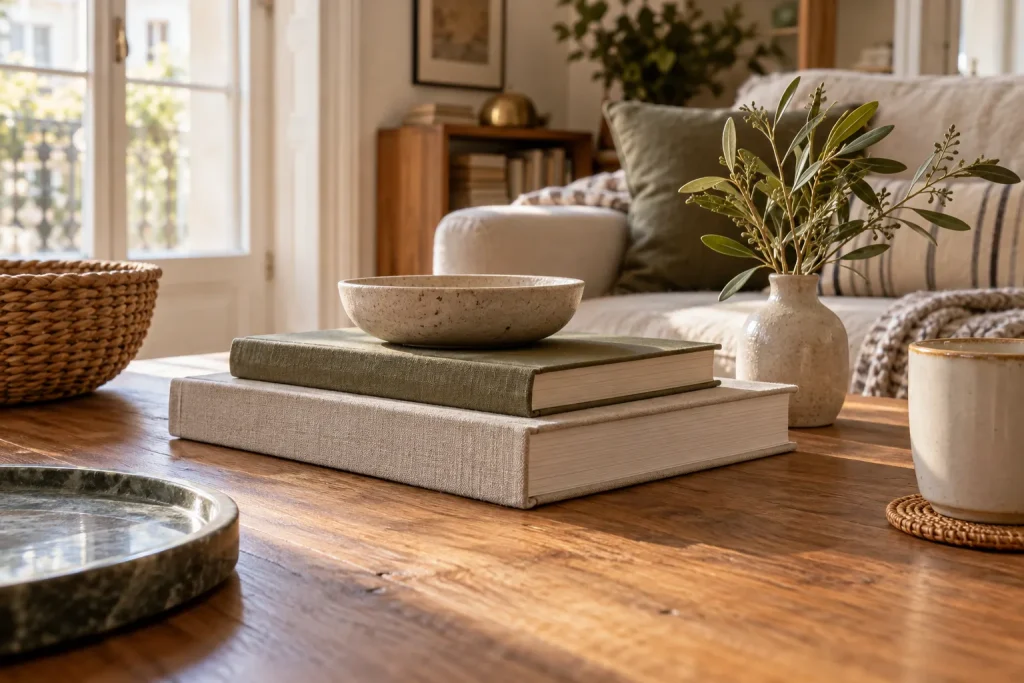
Place the largest footprint at the bottom and work upward with books that sit fully supported. Keep the stack low enough to lift and use without rearranging half the table. Two books often offer enough change in height and texture. Three can work when their combined thickness remains comfortable and the table has sufficient open space.
Align the stack neatly for a quiet, architectural effect. A slight offset can feel relaxed, but avoid corners projecting far beyond the book below. Large rotations use more tabletop and may make the stack look unsettled. The goal is a small variation you can live with, not a pose that has to be restored after every use.
Check the Stack from the Sofa
A stack that looks modest from above can appear surprisingly tall at seated eye level. Sit down and see whether it blocks a view or makes the table feel heavy. If so, remove a volume or choose thinner books. Low arrangements are often more welcoming because the top book remains within easy reach and other objects can sit beside it without competing for height.
Consider how the stack behaves when the top book is removed. The remaining arrangement should still feel coherent. This is a useful test of whether the styling depends too heavily on a perfectly fixed picture. Books are handled objects; a good composition allows that movement rather than making it feel like a disruption.
Pair a Book with One Distinct Object
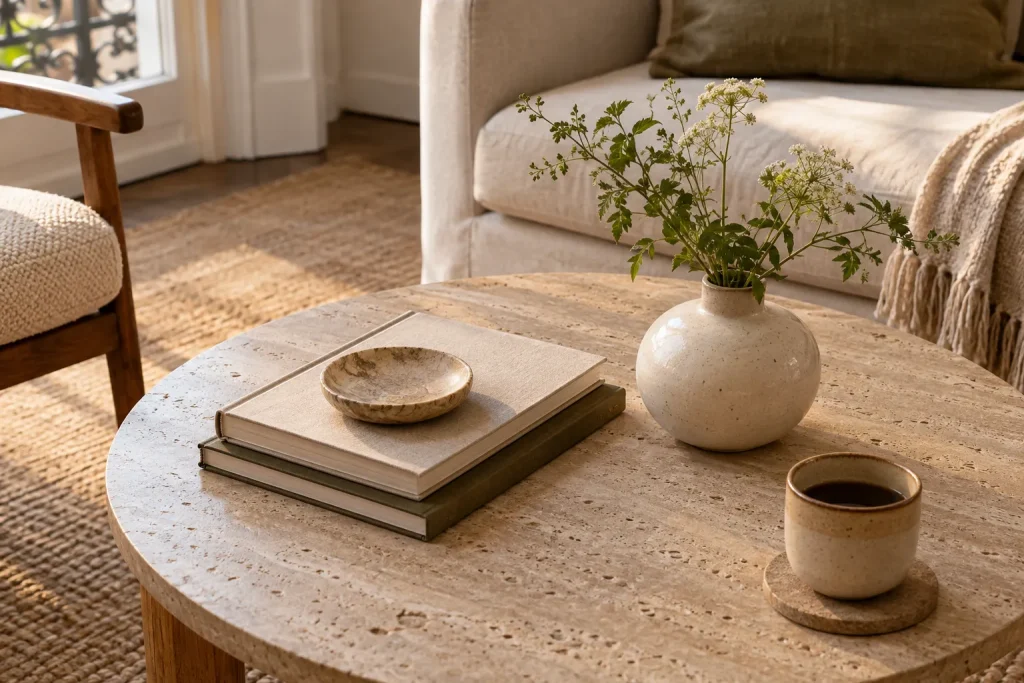
A small bowl, rounded ceramic piece, or modest sculptural object can create a contrast with the books’ straight edges. Choose a companion with a clear silhouette and a reason to be there. A shallow bowl might hold reading glasses when they are not in use, while a simple ceramic form can echo a shape elsewhere in the room.
Keep the object light and easy to remove if it sits on the top book. A heavy vessel may make opening the book inconvenient and can place unnecessary pressure on a cover. Frequently handled books often work better with their companion beside the stack. The relationship remains visible without turning the book into a permanent pedestal.
Separate Books from Water and Heat
Place a water-filled vase on its own suitable surface, away from book pages and covers. Give drinks a separate coaster and keep the landing area clear enough that nobody needs to balance a cup on a stack. Choose an unlit decorative object or a battery-operated light if you want a small glow nearby; books should not become a base for an open flame.
For valuable, delicate, or sentimental volumes, prioritize access and preservation over the display. Avoid placing them where spills are likely or where prolonged direct sunlight will fall across the covers. Publisher or specialist care guidance should take precedence when a particular book needs special handling. Everyday reading copies are often the most comfortable choice for a frequently used table.
Give the Books Space to Open
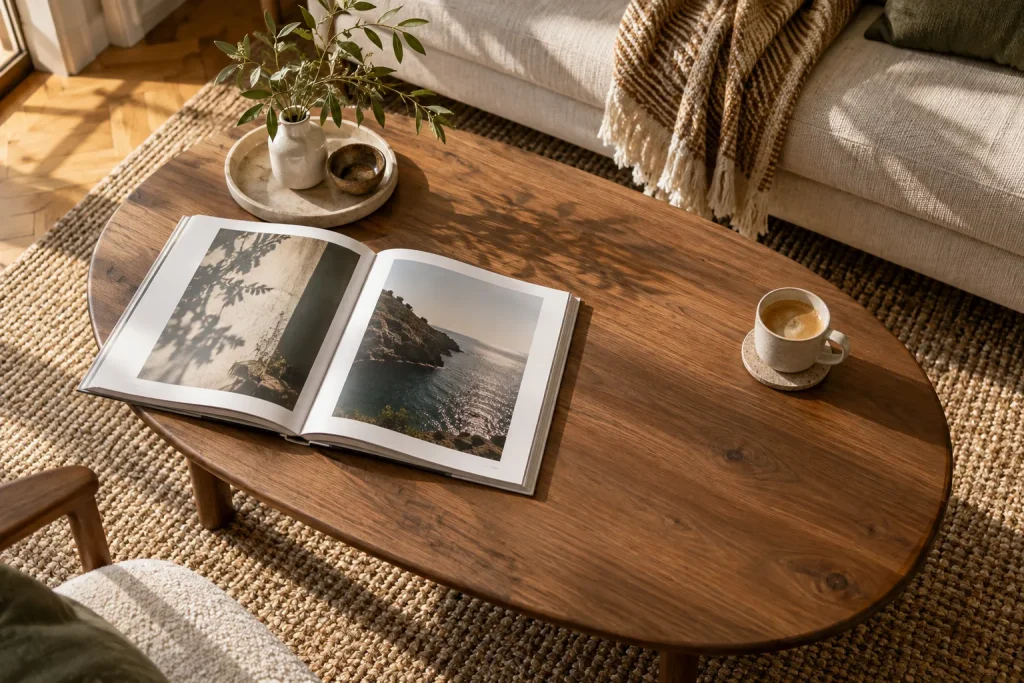
Closed books occupy less room than open ones. Test your arrangement with the top volume open to a favorite spread and notice what has to move. If several objects need relocating, simplify the surrounding display. A clear area beside the stack makes the invitation to read practical rather than merely decorative.
Leave the most frequently read book on top, even if another cover would make a tidier color story. The arrangement can change as your interests change. A book opened during the evening and returned afterward brings a natural rhythm to the table. That small evidence of use often feels more appealing than a permanently untouched composition.
Use a Tray beside the Reading Area
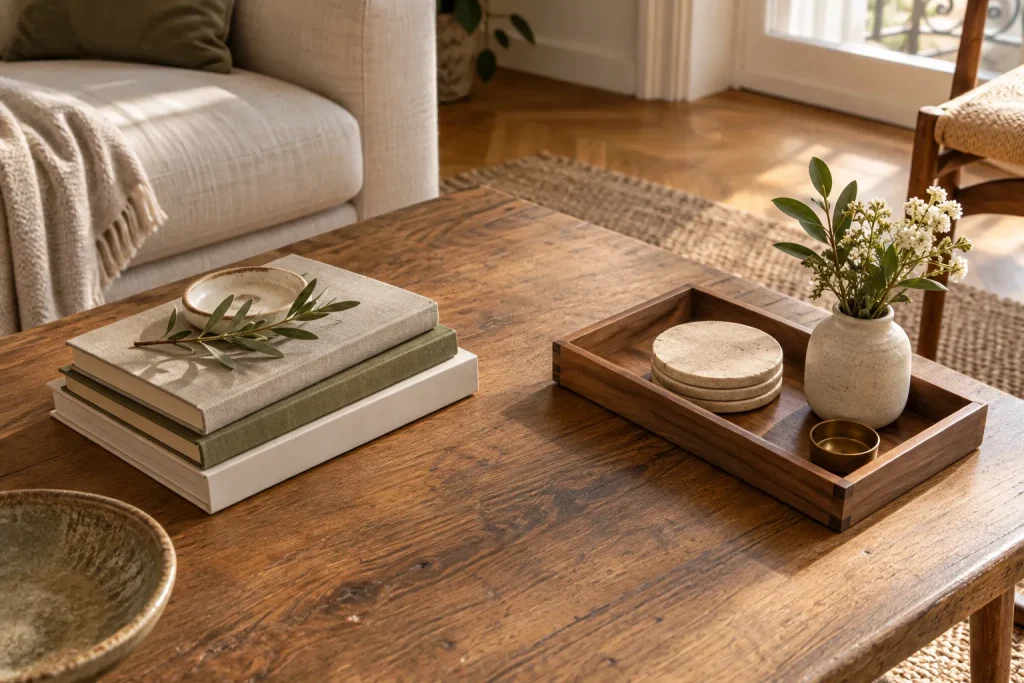
A tray can gather the small items that tend to compete with books: coasters, a remote, or a small decorative bowl. Place it beside the reading area with a deliberate gap between them. This creates two clear roles, one for reading and one for everyday objects, without requiring the tray to hold the books themselves.
The Living Room collection provides material ideas for that neighboring group. A Haven walnut wood tray can bring warmth beside pale clothbound covers. An Alba travertine-look tray offers a lighter, stone-like appearance beside darker books. Check the actual footprint before adding either; the reading area still needs room to expand when a book is open.
A tray is optional on a small table. A coaster and a single bowl may provide all the organization you need. Adding another boundary can make a compact arrangement feel fragmented, particularly when the books already create a strong rectangular shape. Let the available surface decide whether a tray contributes useful order.
If the neighboring tray needs more attention, these coffee table tray decor ideas focus on its internal arrangement. Keep the books as a separate reading invitation, with enough space between the two groups that each can be used without disturbing the other.
Adapt the Stack to the Table’s Shape
On a Round Table
Place a compact stack slightly off center, with its corners comfortably inside the curved edge. A rounded companion object can connect the books to the table’s outline. Keep an open arc on the side nearest the main seat. The straight edges of the books provide structure, while the clear curve keeps the arrangement from feeling boxed in.
On a Rectangular Table
Let the stack respond broadly to the long edge, then give another part of the table a quieter role. A low bowl farther along the surface can balance the books without duplicating them. Avoid a row of separate stacks unless the table is genuinely used as a shared reading surface and has enough space for each group.
On a Glass Table
Books provide a useful patch of opacity against glass. Choose one stack and consider the rug and frame visible below it. Plain covers can feel calmer above a patterned rug, while a stronger cover may work over a quiet background. Leave a substantial clear area so the table retains its transparent quality.
Build a Palette through Texture
Color is only one way to connect books with the room. A woven cover can echo upholstery; a smooth jacket can contrast with a rough ceramic bowl; a dark spine can relate to a metal table frame. These small material relationships allow a varied selection to feel coherent without requiring every cover to belong to the same narrow palette.
For a soft neutral room, try a pale book with a darker, rounded object nearby. For a warmer interior, combine muted terracotta or brown tones with light ceramic. In a graphic room, let one black-and-white cover provide clarity and keep neighboring shapes simple. In each case, the books remain readable objects, and the palette grows from their existing character.
Rotate the Selection without Rebuilding the Room
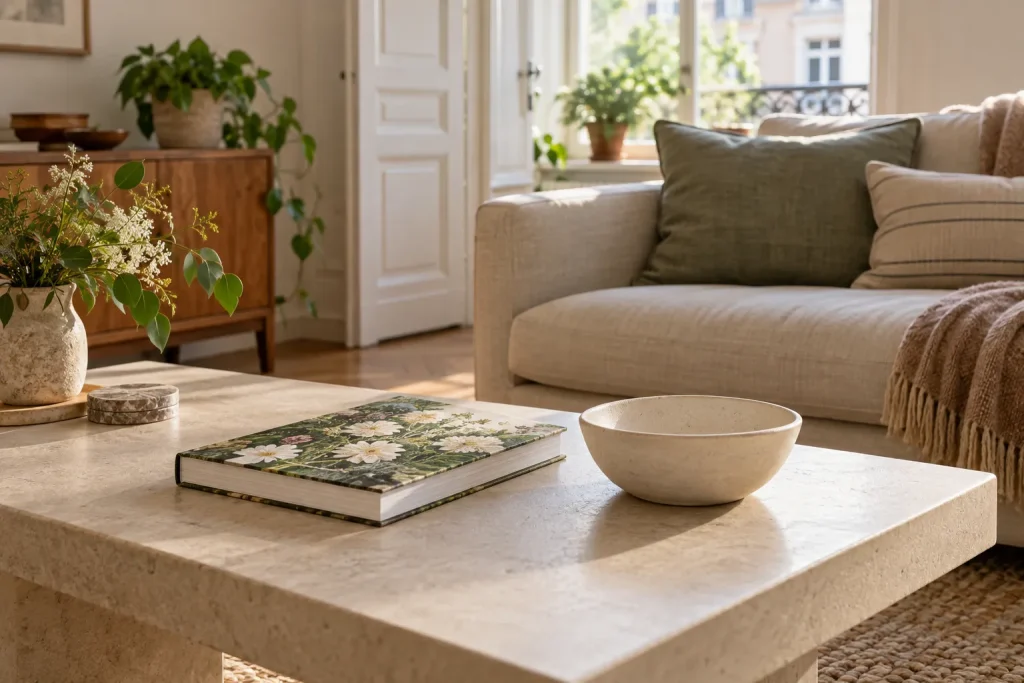
Changing one book can refresh the table more effectively than replacing the entire display. Keep the underlying layout and choose a new top volume when your interests shift. The stack might move from architecture to gardens as the seasons change, while the same bowl and coaster remain useful beside it.
Store the rest of the collection where it is easier to browse. The coffee table does not need to represent everything you own. A small edit gives each chosen book more presence and keeps the table usable. When you rotate, check the new book’s dimensions rather than assuming it will fit the arrangement exactly as the previous one did.
Fix the Small Details that Make a Stack Feel Awkward
If the books look lost, choose one with a larger footprint rather than adding several small ornaments around them. If the stack feels heavy, remove a book or move its companion object beside it. If the covers compete, let one face upward and allow quieter spines to support the composition underneath.
Check the gap between the stack and the table edge. Books placed too close to the perimeter can appear precarious and leave little room for hands. Also check whether the display has quietly accumulated receipts, cables, and unrelated objects. Give those items a separate home so the books can remain a clear, welcoming part of the room.
Frequently Asked Questions
How many books should I stack on a coffee table?
Begin with two and assess their combined height and footprint. One substantial book may be enough; three can work when they stay easy to lift. The useful limit depends on the table and the books, not a fixed styling number.
Should the largest book always go at the bottom?
It is usually the most stable starting point because it supports the books above. Keep the upper books fully supported and avoid pronounced overhangs. If a particular combination feels awkward, use the books separately rather than forcing a stack.
Can I place a decorative object on a book?
Yes, when it is light, clean, stable, and easy to remove. Keep liquids and open flames away. If the object makes the book inconvenient to open, move it beside the stack instead.
Do the covers need to match my room?
No. Choose books that interest you, then connect one color or texture to the room if useful. A thoughtful contrast can feel more personal than a perfectly matched collection chosen only for its covers.
Can one open book be the whole arrangement?
Yes, if the table has enough room and the book can lie comfortably without strain. Leave useful landing space beside it and close it when needed. An engaging spread can provide more character than several additional accessories.
Make the Books an Invitation
Coffee table book decor feels most natural when the books remain part of everyday life. Keep the stack stable, give the top volume room to open, and choose a companion that adds contrast without getting in the way. The arrangement can be beautiful and still change whenever someone finds a page worth sharing. For the wider arrangement, explore coffee table decor ideas.