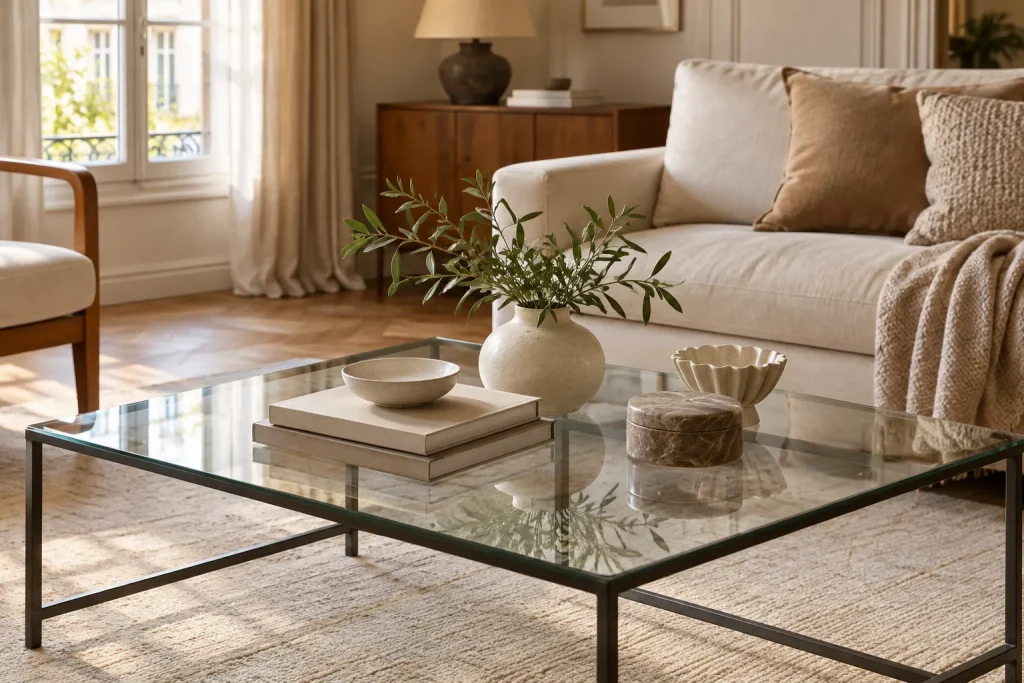
A glass coffee table makes the layers of a living room visible at once: the objects on top, the frame beneath, and the rug below. That openness is its appeal, but it also means a small collection of accessories can look busier than expected. The most effective glass coffee table decorating ideas begin with fewer opaque shapes and a clear view through part of the surface.
Rather than treating glass as an empty stage, consider what is already visible through it. A patterned rug, sculptural base, or lower shelf contributes to the composition before you add a single book. Choose one main group, give it a grounded outline, and leave enough transparency for the table to keep its light presence in the room.
Read the Layers beneath the Glass
Stand near the table, then sit on the sofa and compare the two views. From above, the rug may dominate. From a seat, the metal or wood frame may become more noticeable, and reflections may shift across the top. Both views matter. An arrangement that looks beautifully edited in an overhead photograph can feel cluttered when its objects overlap the frame below.
Notice the strongest existing pattern. A striped rug, detailed table base, or busy lower shelf needs less decoration above it. A plain rug and simple frame leave more room for texture on the surface. This is a visual balance, not a rule about how many accessories glass can hold; the furniture manufacturer’s load and use guidance remains the practical limit.
Treat the Rug as Part of the Palette
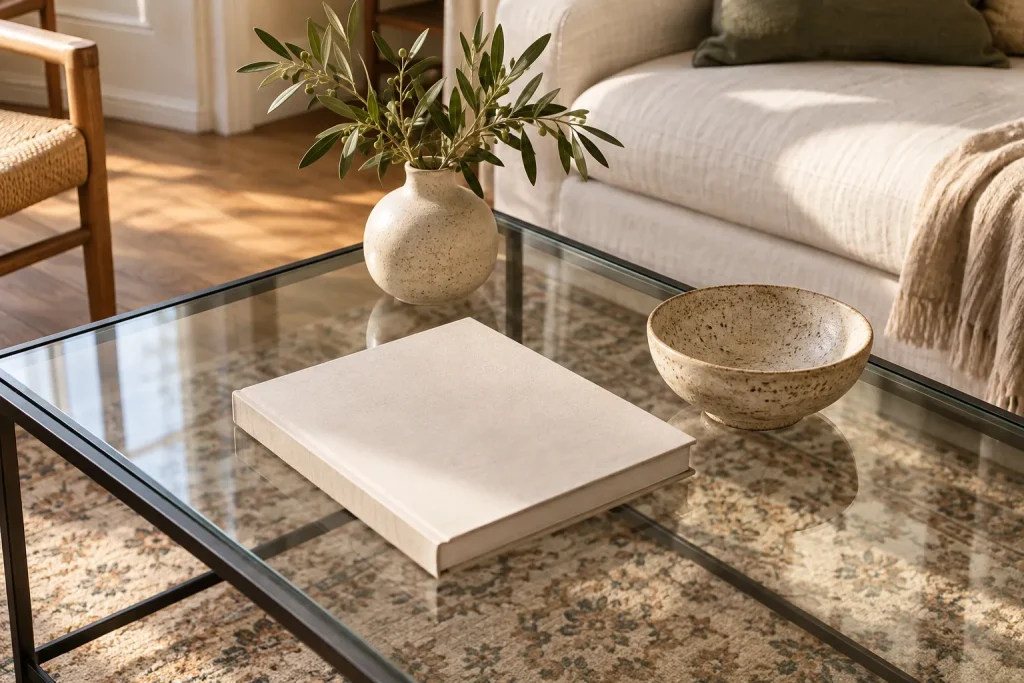
Choose an accessory color from the rug rather than adding an unrelated accent. A soft brown book cover can connect to a muted border; a pale ceramic bowl can echo a light field. Keep the connection subtle. Exact matching can flatten the room, while a related tone gives the top and lower layers a shared language.
If the rug has a strong pattern, start with plain covers and simple vessel shapes. Patterned books and mottled accessories may be attractive individually but compete with what is visible below. Place one object on the table and step back before adding the next. Glass rewards this slower approach because every layer remains part of the view.
Glass Coffee Table Decorating Ideas with One Grounded Group
Create a compact area of visual weight rather than distributing small objects everywhere. A book stack, a low bowl, or a tray can give accessories a defined base against the transparent surface. This makes the group easier to read and allows the rest of the table to remain open. The contrast between opacity and transparency becomes the main styling gesture.
Place the group where it avoids the busiest intersection of the frame beneath. Moving a bowl a few inches can change whether it appears to float awkwardly over a metal bar or sit within a calm visual opening. Check the result from the main seats. The composition should relate to the table’s construction instead of seeming unaware of it.
Preserve a Window through the Surface
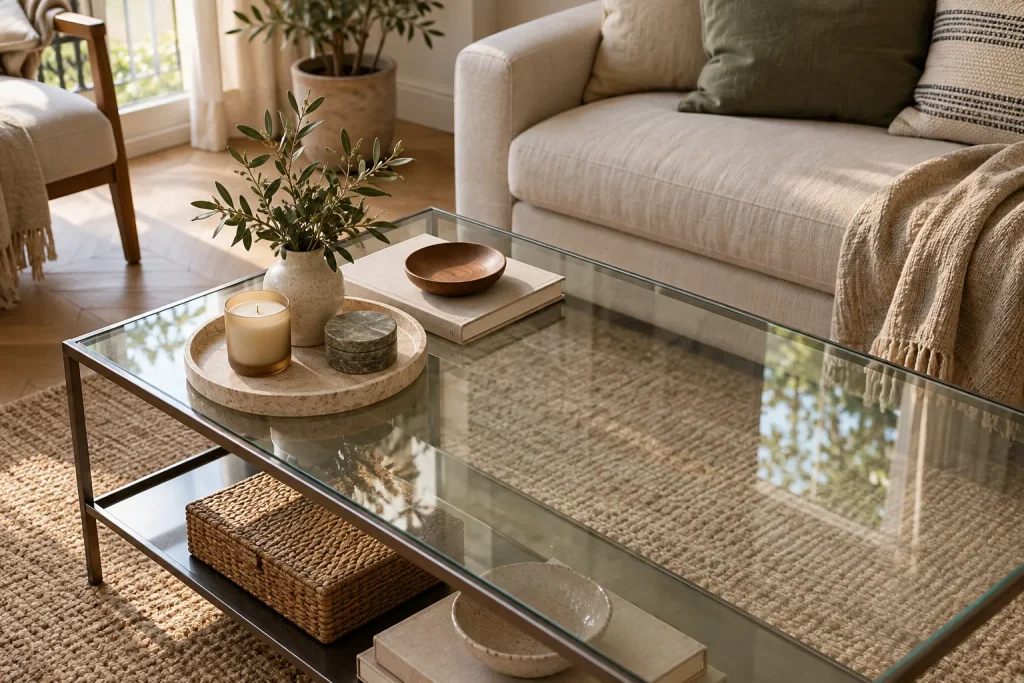
Leave one substantial area completely free of decoration. Several small gaps may technically expose the glass, but they do not create the same sense of openness. A continuous clear area lets the rug and frame remain legible and offers a useful landing place. Position it near the seat that uses the table most often.
Do not fill that clear area simply because the table looks sparse while empty of everyday objects. A mug, reading glasses, or an open magazine will add another layer during use. Style for that lived-in moment as well as the tidy one. The table should still feel composed after someone sits down.
Choose Texture that Gives the Eye a Rest
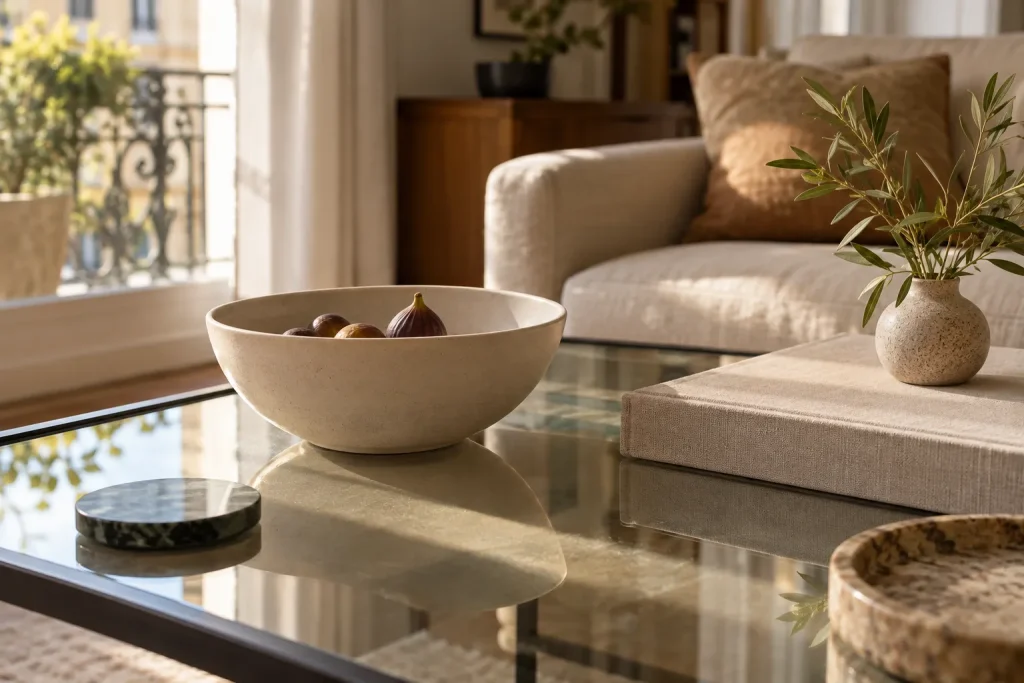
Glass is smooth and reflective, so matte surfaces can provide a useful counterpoint. Linen-covered books, a low ceramic bowl, or warm wood grain give the eye something quieter to settle on. You do not need all three. Choose the texture that supports the room and let the remaining pieces stay simple.
Be selective with additional transparent objects. A clear vase on clear glass can look delicate, but its outline may disappear against a busy rug. A vessel with a slightly more defined silhouette may read better. If you enjoy the transparency, give it a calm background and avoid surrounding it with several other reflective pieces.
Keep Metallic Accents Deliberate
If the table already has a metal frame, repeat its tone sparingly. A small brass detail can connect to a warm frame, while a dark bowl can echo black metal without adding another shiny surface. Too many reflective finishes may multiply points of light and make a restrained palette feel restless. Let the frame carry most of that character.
Use a Tray to Define an Opaque Island
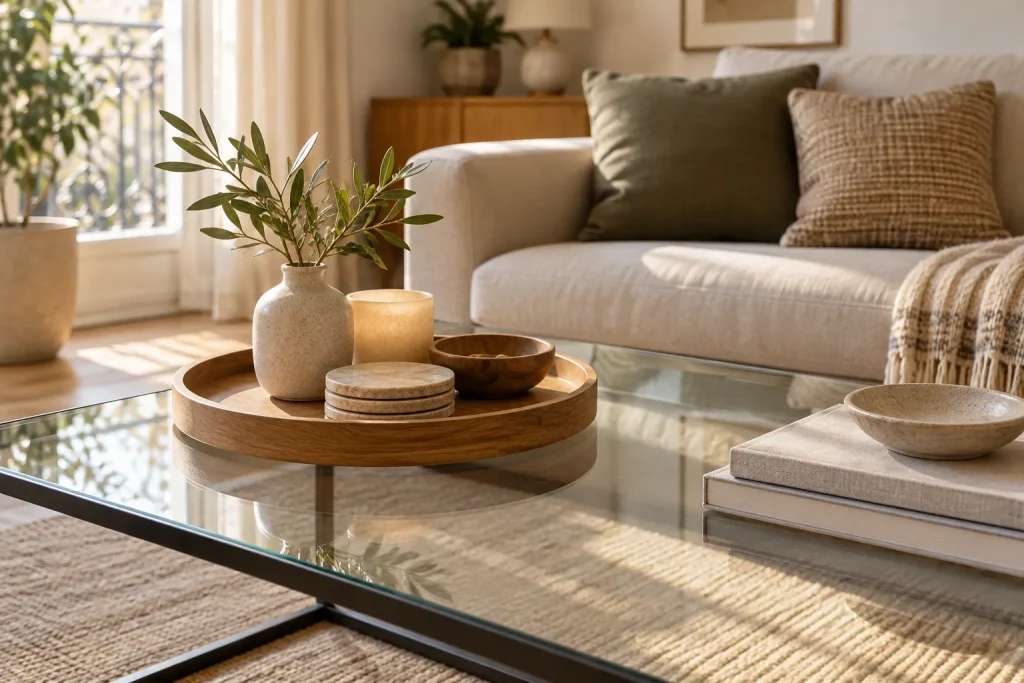
A tray gives small items a clear outline on glass, particularly when coasters or a remote would otherwise appear scattered. Choose a footprint that leaves a generous transparent margin. The tray does not need to be large enough to hold every accessory; its role is to gather one useful group and make that group easier to move.
Compare the material relationships in the Living Room collection. A Haven walnut wood tray introduces a warm, opaque surface against the glass. An Alba travertine-look tray offers a pale stone-like appearance that can sit quietly beside neutral upholstery. Alba’s travertine-look description concerns its appearance; it should not be treated as natural travertine.
Before placing any tray or vessel, check that its underside is clean and compatible with the table’s care instructions. Lift objects when moving them instead of dragging them across the surface. Do not assume that a decorative tray is a protective mat or that a soft-looking base is suitable for every finish. Follow the table and accessory manufacturers’ guidance for contact materials and permitted loads.
For details within that grounded group, explore these coffee table tray decor ideas. Then step back and check the transparent area around it. On glass, the relationship between the contained group and the view beneath the table matters as much as the objects inside the tray.
Let Books Supply Shape and Color
A short stack of books can provide a calm rectangle within the shifting reflections. Choose covers that relate to the room, then let the books remain recognizable and accessible. A single broad volume may create enough grounding for a small object. Avoid a tall stack that hides the transparent quality you chose the table for.
If the displays you have seen feel too dense, simplify the idea to one book and one companion piece. Notice how much clearer each becomes when it has space around it. You can still introduce color through a spine or cover without turning the entire surface opaque.
Keep drinks on a suitable coaster in a separate landing area rather than beside exposed book pages. This is especially useful when the books form the main styling group: a cup should not require moving the display or balancing near its edge. Practical separation helps the arrangement remain calm throughout the evening.
Style the Lower Shelf with Restraint
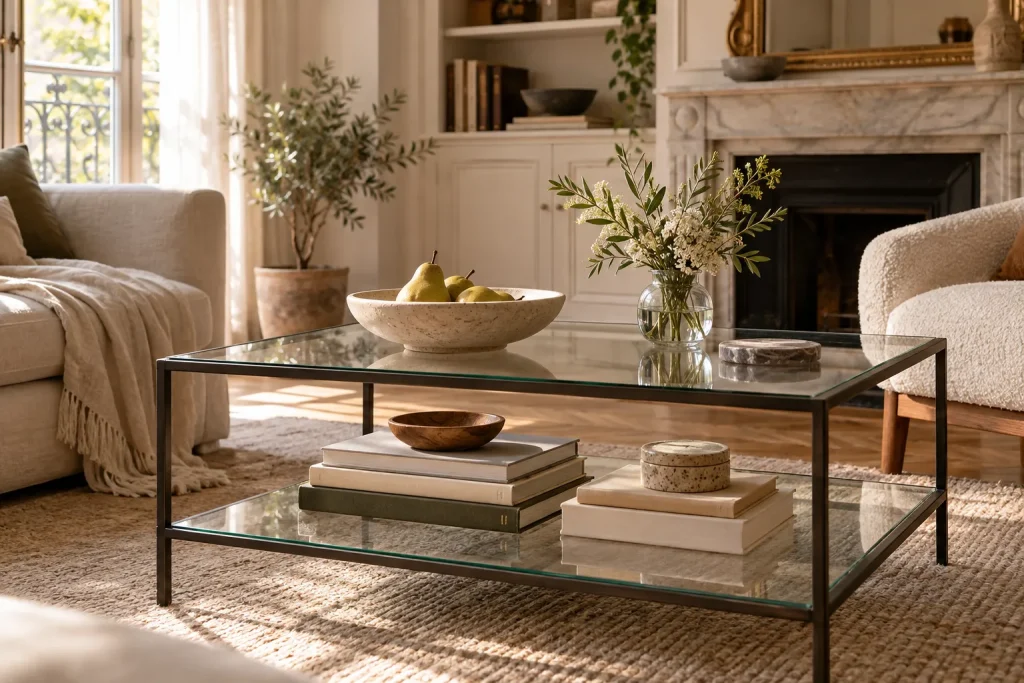
On a two-tier glass table, consider the lower shelf before finishing the top. A few books below may provide enough color and weight that the upper surface needs very little. Leave visible space between lower items, and avoid arranging objects directly beneath every object above. Overlapping silhouettes can make two modest displays look like one crowded one.
Choose a clear role for each level. The lower shelf might hold a small reading selection, while the top carries a low bowl and coasters. If remotes or practical items belong below, make sure they remain easy to reach. Hidden-looking storage that is visible through glass still contributes to the room, so its placement deserves the same thought as the decorative pieces.
Three Moods for Glass Coffee Table Decor
Soft Neutral and Textural
Pair a pale clothbound book with a warm ceramic vessel and leave the surrounding glass clear. A quiet rug beneath allows the different textures to show. Keep the vessel low and the palette close to the upholstery, so the table feels integrated into the seating area rather than like an independent display.
Dark Frame and Graphic Contrast
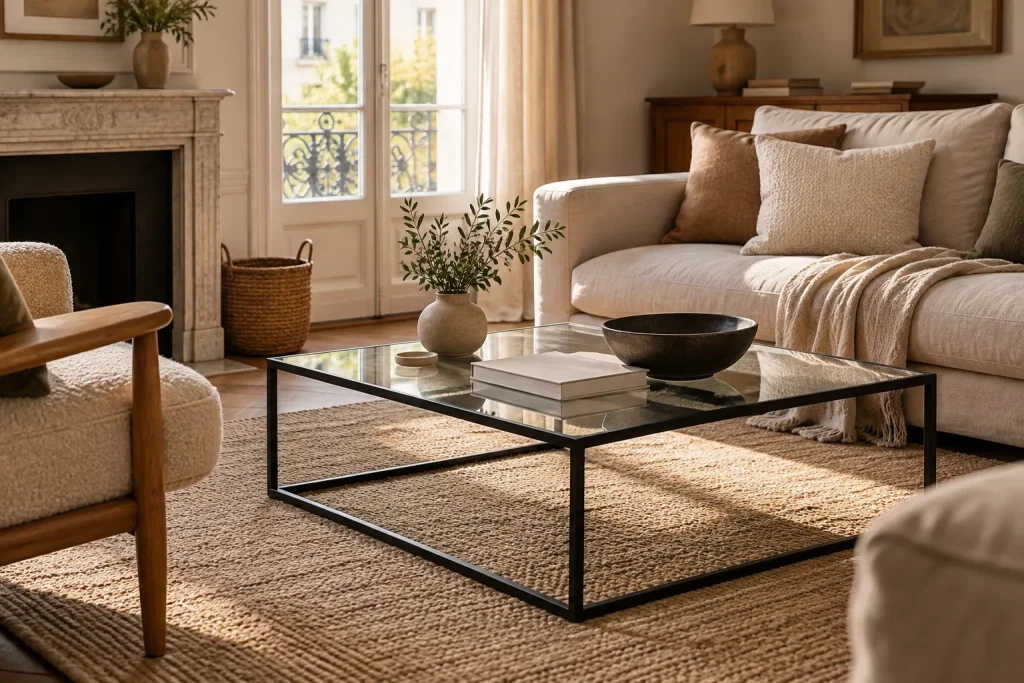
With a black frame, use one light book and a dark rounded bowl to echo the structure without repeating every line. Keep the objects away from visually busy frame intersections. The light cover provides a grounded patch, while the open glass prevents the darker elements from making the center of the room feel too dense.
Warm Wood and an Airy Stem
A wooden tray and a modest vase can soften a glass table in a room with pale walls and linen upholstery. Keep the stem arrangement open rather than spreading branches across the tabletop. Let the warmth of the wood provide most of the contrast, with the greenery acting as a small connection to the wider room.
Edit Reflections and Everyday Clutter
View the table in both daylight and evening light. An object that reads clearly by the window may merge with a lamp reflection later. Move the decorative group slightly before adding another piece for emphasis. Sometimes the better solution is a matte surface or a different position, not more contrast or a larger display.
Keep the reset routine simple. Return the remote to its place, close the book, and clear used cups. Clean the glass according to the table maker’s instructions rather than assuming any household spray is suitable for the entire piece, including its frame and joins. A manageable arrangement makes this routine easier because fewer objects need to be lifted and replaced.
If the table still feels crowded after tidying, look beneath it. A busy rug, full shelf, and several opaque accessories can produce more detail than the room needs. Remove one layer of visual information and reassess. The transparent surface does not have to reveal everything equally; it needs a coherent balance between what is visible and what is emphasized.
Frequently Asked Questions
What is the easiest way to decorate a glass coffee table?
Start with one compact group, such as a low book and a ceramic bowl, and leave a continuous area of glass clear. Check the arrangement against the rug and frame from a seated position before adding anything else.
Should I use a clear tray on a glass table?
You can, but it may not provide much visual definition. A matte or wooden tray often gives small items a clearer outline. Choose according to the room’s layers, and check the table’s instructions before placing any accessory on it.
Can I put a heavy stone object on glass?
Do not judge suitability from appearance alone. Check the table’s stated load limits and contact-surface guidance, along with the object’s weight and base. If those details are unavailable, choose a lighter accessory rather than assuming the glass can support it safely.
How do I keep the lower shelf from looking cluttered?
Give it one role and leave some of it empty. A small reading selection is easier to understand than mixed books, cables, and ornaments. Avoid directly stacking visual groups above one another across both levels.
Does glass need a completely neutral palette?
No. One considered color can look beautiful, especially when it echoes the rug or artwork. Keep the surrounding shapes simple so the color has room to register without adding unnecessary visual noise.
Keep Transparency in the Composition
A glass table looks most at ease when the space beneath it remains part of the room. Give a few objects a clear base, choose texture thoughtfully, and keep a generous window through the surface. The result can feel warm and lived-in while preserving the lightness that makes glass so appealing. For the wider arrangement, explore coffee table decor ideas.