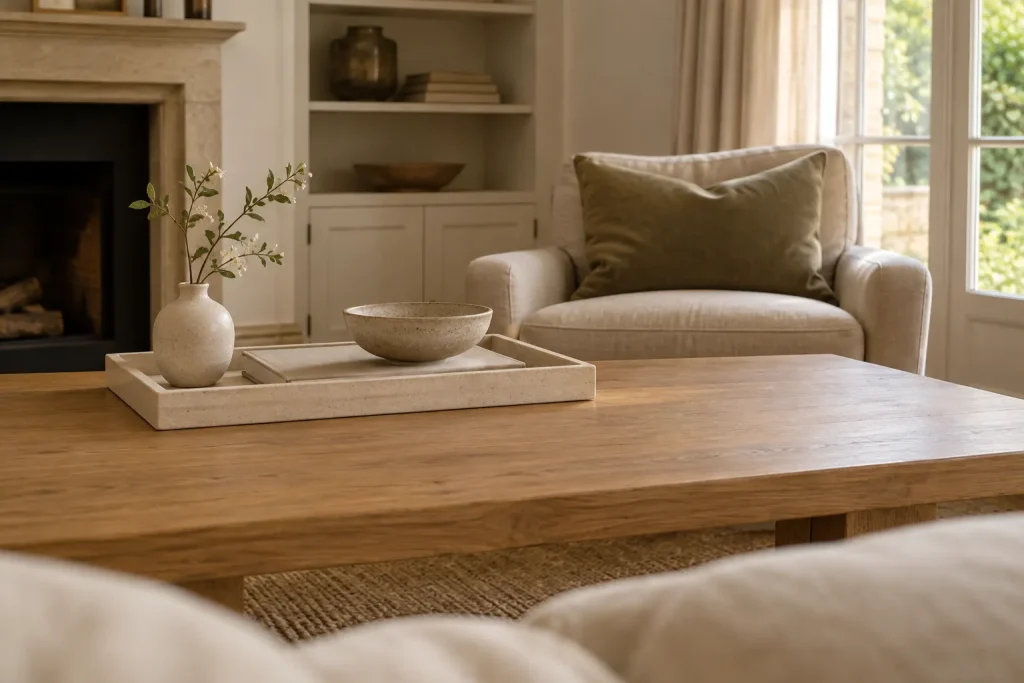
The most inviting coffee table tray decor ideas begin with a few things you enjoy using and seeing. A well-chosen tray gives those objects a shared place: a book you are reading, a small ceramic bowl, perhaps a slender vessel with a single branch. Their textures feel connected, while enough of the table remains open for an ordinary evening at home.
That balance is what makes an arrangement feel collected. Each piece has a reason to be there, and the tray brings a quiet sense of order without taking over the surface. Begin with the table you already have and the way you reach it from the sofa. Then consider the tray’s footprint, its relationship to nearby materials, and the spaces between its contents.
Coffee table tray decor ideas start with a clear boundary
A tray works as a small composition within a larger surface. Its rim draws a visible boundary around objects that might otherwise seem scattered. Before adding anything decorative, decide what you want that boundary to hold. A place for a remote and a small bowl requires less space than a grouping with books and a vase.
Notice how you use the table over a few evenings. A book may land on the side nearest your usual seat. Another person may need a clear corner for a cup on its own coaster. Keep those habits in mind when positioning the tray. An arrangement that occupies your natural resting place will soon become something you move out of the way.
Start by gathering the objects you would like to include on an empty patch of the table. Leave gaps between them so their shapes are easy to read. This loose grouping gives you a useful starting point for the tray’s size. It also reveals whether a tall object, a wide bowl, or a thick stack of books is doing most of the visual work.
Match the tray to the surface around it
Find a comfortable footprint
Use a sheet of paper cut to the approximate size of a tray you are considering. Set it where the tray would sit and place your chosen objects inside its outline. View it from your normal seat as well as from above. This simple trial helps you judge the usable space around the grouping before choosing a finished piece.
Look for clear tabletop on the sides people actually use. There is no universal percentage that suits every room. A compact table shared by two seats needs different clear areas from a longer table beside a large sofa. The important detail is that the tray feels contained, with accessible space around it and objects that fit comfortably inside the rim.
Avoid choosing a tray solely to accommodate every decorative item you own. If the paper outline crowds the table, reduce the grouping and test again. One book and a small vessel can make a more convincing arrangement than several objects pressed against each other. The exposed tabletop becomes part of the composition, especially when it has a beautiful grain or a quiet stone pattern. For the wider arrangement, explore coffee table decor ideas.
Let shape establish a gentle relationship
A rounded rectangular tray can repeat the length of a rectangular table while softening its corners. An oval tray introduces a flowing outline beside straight edges. On a round surface, a circular tray can create a calm nested relationship, while a smaller tray with a different outline brings a little variation.
Consider the shapes inside the tray too. A rectangular book gives structure to a curved tray. A low round bowl softens a straight-sided one. Repeating every outline can make the grouping feel rigid, so let one or two forms echo each other and allow the remaining piece to introduce a quieter change.
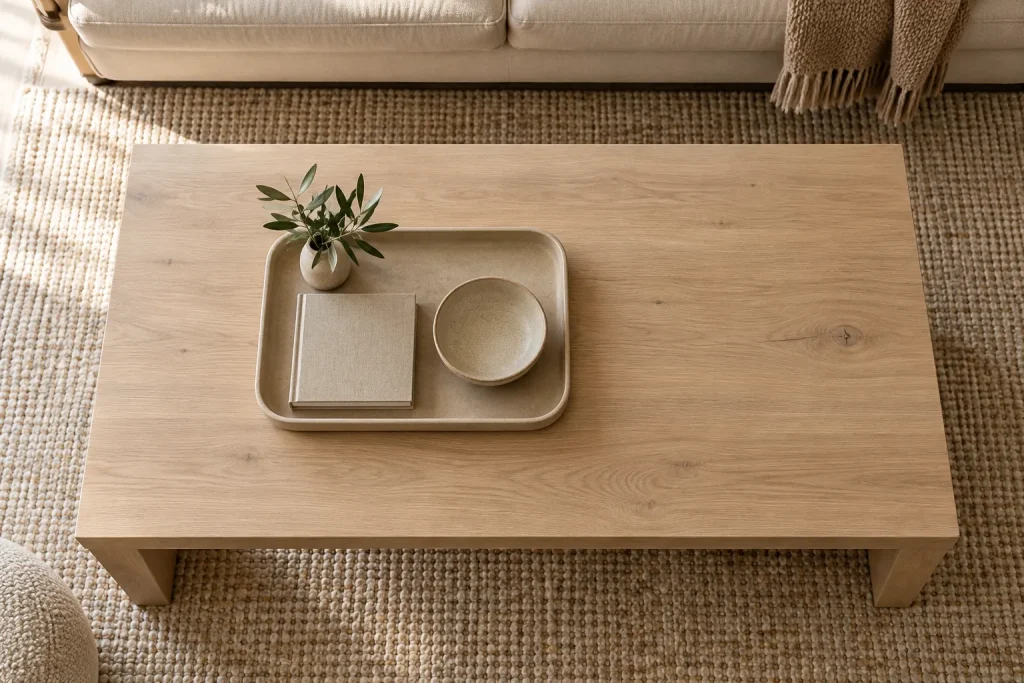
Choose texture with the room in mind
The tray can connect materials already present in the living room. Warm wood may relate to a chair frame or a shelf. A pale stone texture can sit comfortably with linen, plaster, and soft upholstery. Choose the relationship you want to emphasize, then look at how clearly the tray’s edge remains visible against the table.
Wood on wood benefits from a considered difference in tone or grain. A darker tray on pale oak creates a distinct outline, while closely matched tones give a softer effect. If the two surfaces blend together, a light ceramic bowl or a book with a plain cloth cover can help the contents remain legible. Keep the palette focused so the textures have room to speak.
The coffee table trays for living rooms collection offers a place to compare options once you have a useful footprint and a material direction in mind. Think about the tray within your existing room as you browse. Its color, outline, and surface should support the grouping you have planned.
For two different material directions, the Haven walnut wood tray is made from walnut wood and comes in Small and Large options. The Alba travertine-look tray uses a sandstone and stone blend with a travertine-look finish. That description refers to its appearance; it does not identify the tray as natural travertine. Compare the listed dimensions with your paper outline before selecting either option.
Material also determines which product instructions to consult. Use the wood and bamboo care guide or the stone blend and composite care guide as relevant, alongside the specific tray’s directions. Keep cups on suitable coasters and choose objects with bases appropriate for the surface. A decorative arrangement should remain straightforward to lift and care for.
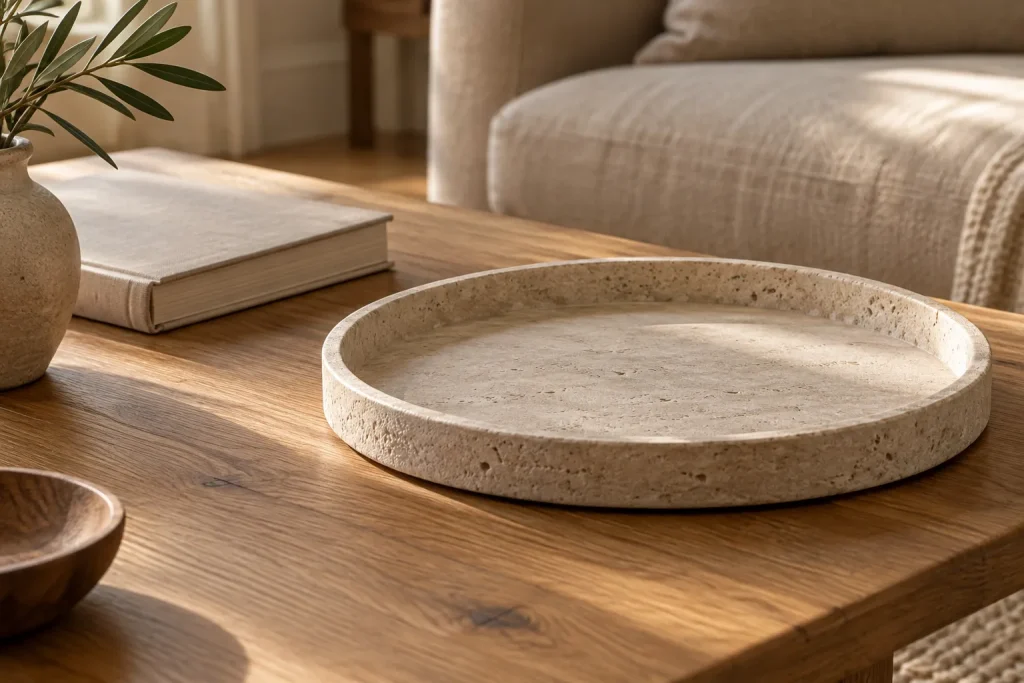
Styling a coffee table tray with height, weight, and space
Begin with a low anchor
When styling a coffee table tray, place the lowest substantial object first. A closed book or a shallow ceramic bowl gives the grouping a steady base. Position it slightly away from the center and see how much of the tray remains visible. This first piece establishes the scale for everything that follows.
Choose a book you actually enjoy rather than a stack assembled only for its covers. One or two volumes are often enough for a small arrangement. Keep them inside the tray’s boundary and easy to remove. A book that overhangs the rim can make the grouping look unsettled and awkward to lift.
Add one change in height
A modest vertical element gives the eye somewhere to travel. Try a small vase with a single stem or a narrow ceramic vessel. Place it beside the low anchor, where it has its own outline. From the sofa, check that you can still see the person sitting opposite you and the main features of the room.
Height is relative to the arrangement around it. A short vessel can provide enough variation beside a flat book. You do not need a tall branch to make the tray interesting. If several objects rise to a similar height, remove one and see whether the remaining forms become easier to appreciate.
Give the smallest piece breathing room.
Finish with a small object that has a personal or useful role. A bowl for a remote, a little ceramic dish, or a keepsake can introduce a different texture without competing with the larger forms. Set it where your hand can reach it easily, with a visible gap between its edge and the neighboring piece.
Three elements make a helpful starting point, but the final number depends on their size and purpose. Two objects may be sufficient in a narrow tray. An extra small piece can work in a larger one if the grouping still feels open. Stop adding when the rim, the tray surface, and the individual objects remain easy to see.
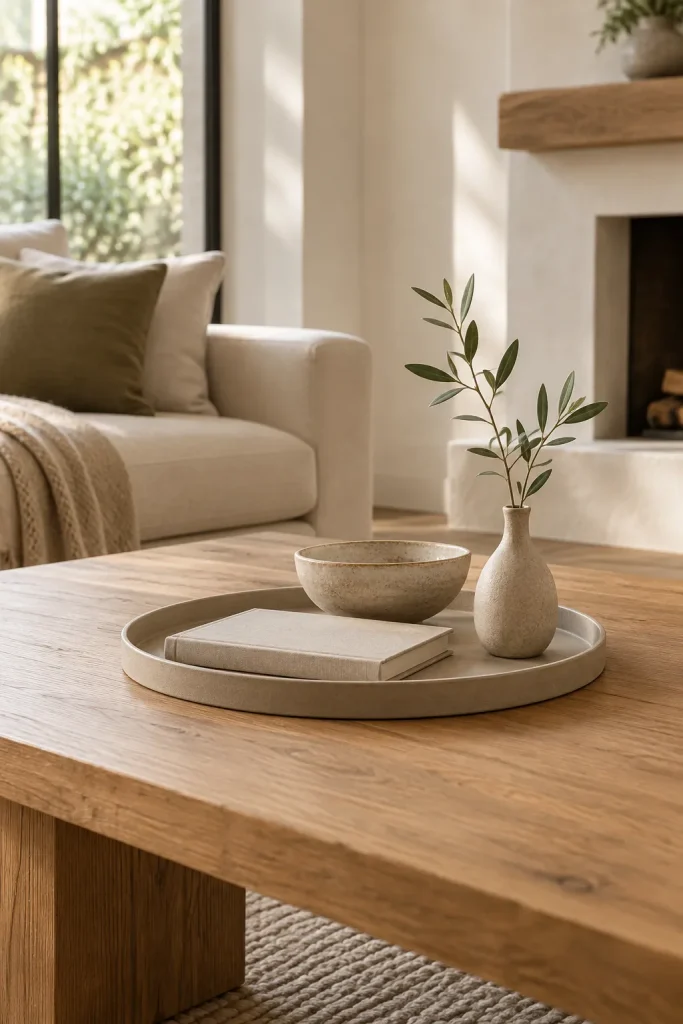
Round coffee table tray decor ideas that feel balanced
Round coffee table tray decor ideas often work well with an off-center grouping inside the tray. Place a low book or bowl toward one side, then let a small vessel occupy a different part of the circle. Keep a curved area of the tray visible between them. This open crescent helps the composition feel relaxed.
Avoid arranging everything in a ring around the rim. That can leave an empty middle while making the edges feel busy. Instead, bring the objects into a loose group with separate outlines. View the arrangement from more than one seat, since a round table is often approached from several directions.
If the tray and table are both circular, distinguish them through scale, tone, or texture. A pale tray on darker wood can make the smaller circle clear. A textural ceramic bowl introduces another surface without requiring another color. Keep the whole grouping small enough that the surrounding table still feels available.
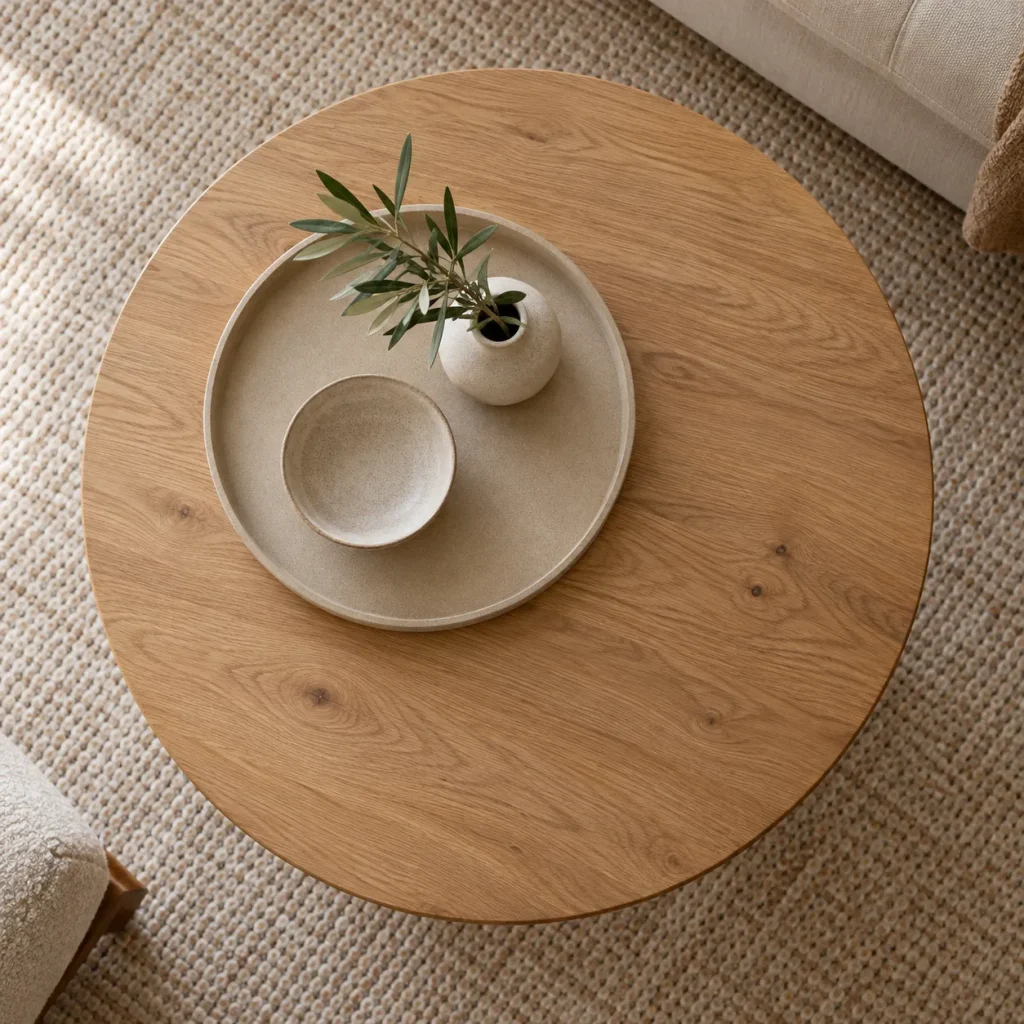
Three coffee table tray ideas for everyday living
A quiet reading corner
Begin with your current book, a low ceramic bowl, and one small vessel. Use a restrained palette that relates to the chair or sofa nearby: a warm cloth cover, muted ceramic, and the tray’s own material. Keep the book easy to lift without moving everything else. The grouping feels personal because it reflects a real habit.
A shared sofa
For a table used by several people, let the tray hold fewer decorative objects. A shallow bowl or open area for a remote may do more useful work than another ornament. Place a small vessel toward the less frequently used side, and keep the contents low enough to remain visible from different seats. Leave the surrounding tabletop accessible.
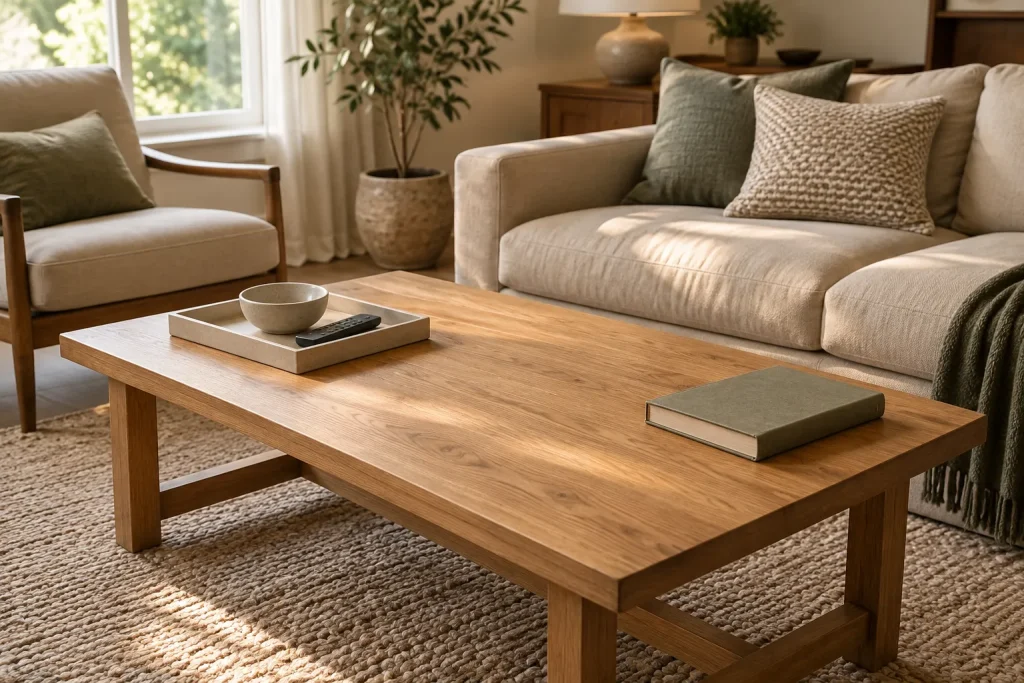
A long table with room to spare
Use one contained tray grouping near the part of the table you reach most often. Within it, a low book, a small dish, and a slender vessel can provide enough variation. Let the remaining surface stay simple. A larger table does not require a larger collection inside the tray; clear space makes the chosen objects easier to notice.
Edit the tray from your usual seat
After arranging the pieces, sit down and look again. An object that seems small from above may dominate the view from the sofa. A vase may hide the bowl behind it, or the edge of a book may crowd the tray’s rim. Move one piece at a time so you can see what each adjustment changes.
Then test the arrangement in use. Pick up the book, reach for the remote, and return each item to its place. If you need to rearrange the whole grouping for a simple action, reduce the contents. Keep heavier objects positioned so the tray remains stable, and follow the product’s instructions when lifting or moving it.
Small edits are enough to keep the grouping fresh. Replace a stem, change the book, or remove a piece when your habits change. Give a new object space by taking something else away. The result should feel familiar and easy to maintain, with a few details that continue to reward a closer look.
Frequently asked questions
What should I put in a coffee table tray?
Start with a low, useful object such as a book or a small bowl, then add a modest change in height if there is room. Include a personal detail only when it fits comfortably. Keep each piece accessible and leave part of the tray surface visible.
Does the tray need to match the coffee table?
It can relate through tone, texture, or shape without matching every detail. A darker wood tray on pale oak creates a clear outline, while similar tones give a softer effect. Check the combination in your room’s light and make sure the objects remain easy to distinguish.
How can I style a tray on a small coffee table?
Test the footprint with paper and begin with two compact objects. Choose low forms, keep the arrangement within the rim, and preserve space on the side you use most. If the tray makes everyday use awkward, try a smaller footprint or fewer contents.
Should a coffee table tray be centered?
Place it where it balances the objects and leaves useful tabletop within reach. A slightly off-center position often suits everyday use. Check it from the seats around the table, and adjust it when an edge or a tall object interrupts the view.
A collected arrangement for everyday life
A calm tray arrangement grows from a useful footprint, a considered material, and a few objects with clear roles. Let a low anchor establish the grouping, introduce a gentle change in height, and leave enough space to appreciate each piece. Keep checking the result from the place where you sit. The most satisfying composition belongs to the room because it belongs to the way you live there. The same balance applies when styling a decorative tray across rooms.